
It snows nine inches overnight. You wake up to a driveway you cannot get out of, and you start calling.
That is the wrong time to start shopping for snow removal service. Every crew in the west metro is already out running a route that was set before the snow started, and those routes are full of people who signed in September. Nobody gets added at 5am.
That is most of what a seasonal contract buys you. Not a discount. A place on the route before the weather decides who gets served first.
Here is exactly what the agreement commits us to, in plain language.
What starts the clock
Service triggers at two inches of new accumulation in a single snowfall event.
A few details in there matter more than they look.
We measure it, at pavement level, at several points across the service area. We do not measure at your address, and there is a reason for that. Snow depth varies by a couple of inches across a driveway depending on drifting, wind and sun, so a per-property measurement would come down to which end of the slab someone put the ruler on. Measuring across the area at pavement level gives everyone the same standard.
Events do not stack. Two separate one-inch snowfalls are not a two-inch event, and neither one triggers service on its own. Between snowfalls under two inches, the driveway is yours.
Our plow trigger is set to two inches because one inch of snow is easy to shovel by hand and has the potential to melt naturally on its own. Dispatching heavy equipment for a single inch would unnecessarily increase service costs. At two inches, however, the snow is unlikely to melt quickly and will pack down into rough, icy ruts that make driving difficult, thus making professional clearing necessary.
What "unlimited" actually means
There are no caps and no per visit charges within the contract period. Whether it is a heavy winter or a light one, your price stays the exact same.
An unlimited contract functions just like an insurance policy. It takes weather completely out of the equation. No matter the amount of snowfalls that trigger two inch service visits, your rate never changes, and your driveway gets cleared without fail. You are not just paying for snow removal; you are buying total peace of mind and the guarantee that no matter what winter throws at us, we have you covered.
When we show up
We start once snowfall has stopped, or once it has piled up to six inches, whichever comes first. In a long storm we run rounds for every six inches rather than waiting it out. Minnesota averages a six inch snowfall just once per winter.
Driveway service is guaranteed within sixteen hours of the snow stopping. However, we typically finish all service routes within six to eight hours.
The gap between sixteen and eight is deliberate. Sixteen is the number we will put in a contract and stand behind on the worst night of the year. Six to eight is what actually happens most of the time. A company promising two hours in every storm is either not busy or not telling you the truth about a twelve-inch event.
What is not included
This is the part most companies bury, so here it is up front.
Snow the city plow leaves at the end of your driveway. On rare occasions, a city plow may pass by after we have serviced your driveway and leave a small ridge of snow across the apron. To help prevent this, we clear a small portion of the road adjacent to your driveway during our regular service to minimize or eliminate any ridge the city might leave behind. Most of the time, any remaining buildup is minor. If the city does leave an unusually heavy block that requires clearing, we can return and clear it for an additional $60 per visit.
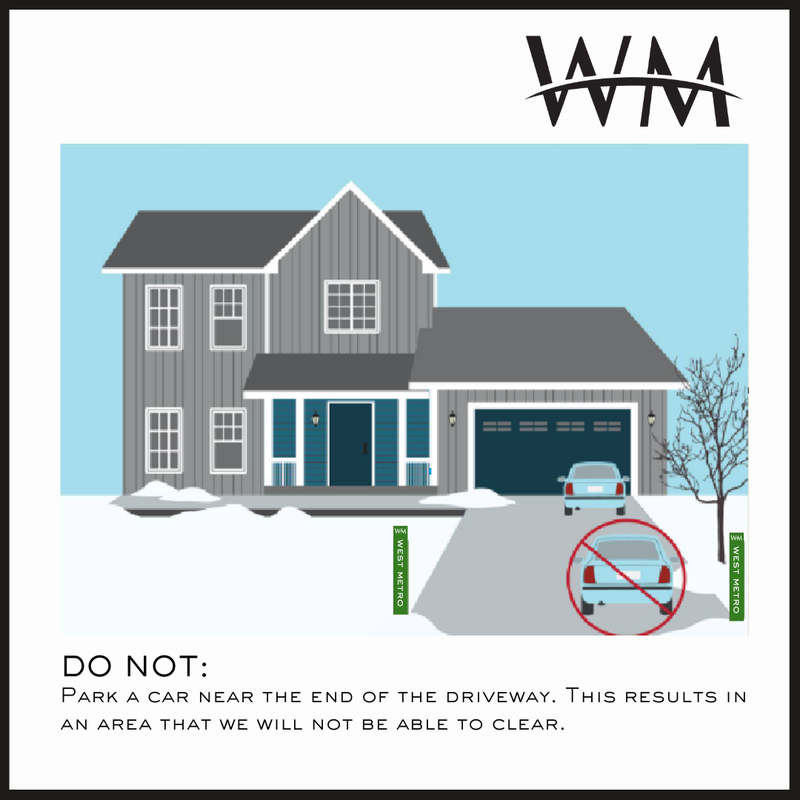
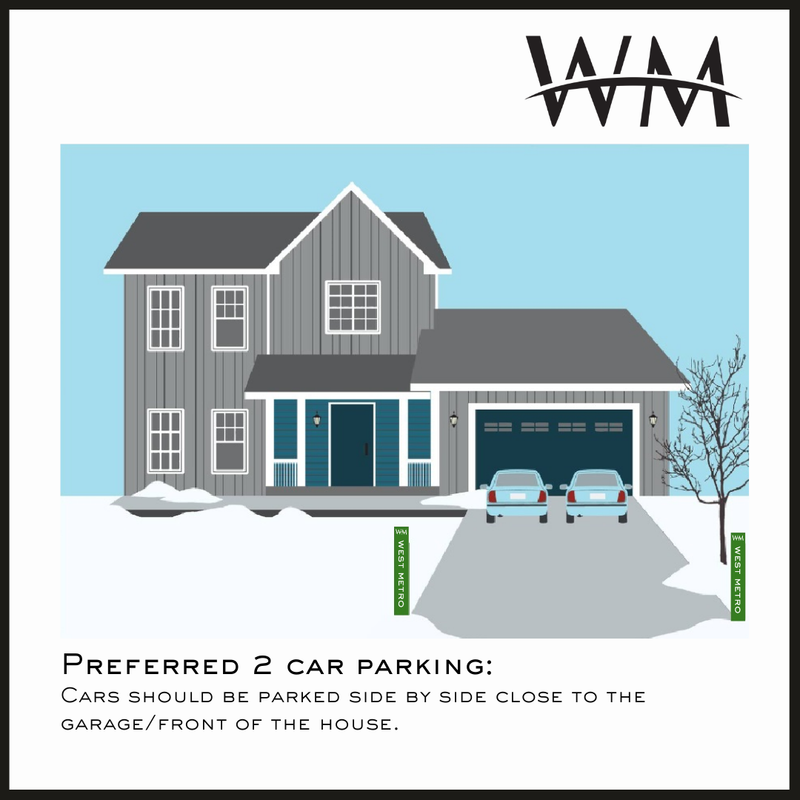
Snow we could not reach because a car was parked in it. Driveways need to be clear before a storm. If we have to come back, that callback is billed at a minimum of $60. We also stay three feet away from parked vehicles, which means a car left out does not just block its own space.
Salting. If we determine salt is necessary, that is a $60 charge. In fifteen years we have mandated salting one time.
Service outside November 1 to April 30. That runs $60 per visit. In fifteen years we have needed to do it zero times. October snow in this market melts on its own within a few days.
Those last two numbers are the honest answer to a fair question, which is how many surprise charges show up on a seasonal contract. In fifteen years of operating, the two chargeable extras in the agreement have been triggered a combined once.
Two Driveway Requirements
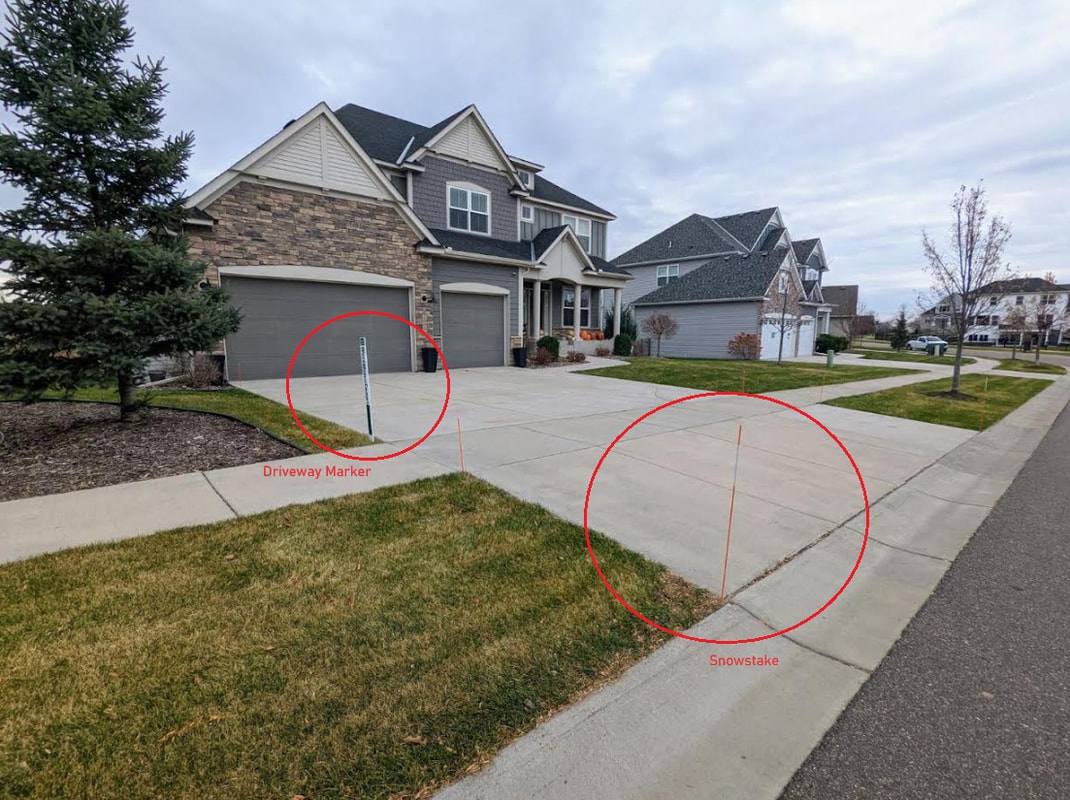
A sign at the end of the driveway. We require a 4' x 4" marker along the driveway for the full season. That is four feet tall and four inches wide, a tall thin sign, not a four-foot square.
It sounds like a formality. It is not, and it is a requirement rather than a request. Our drivers are running a route in the dark, in blowing snow, often on a road where every mailbox and every driveway entrance looks the same. The sign provides our operators a visual marker that increases route efficiency. Service is not provided without it.
Snow stakes along the driveway edge. Unless you have contracted our staking service, staking is yours to do, and we ask that you install standard flexible fiberglass snow stakes. If you are not sure which is which, we walked through the difference in snow stakes vs. driveway markers.
Separately, and this one matters regardless of who stakes the driveway: electrical boxes, light posts, water mains and anything similar have to be marked by you. Our operators cannot see what is under the snow, and those are the items that turn a routine snow removal visit into an expensive repair.
A pre-winter prep checklist
Damage is rare, but when it happens, it almost always involves summer items left near the driveway. You can avoid virtually all issues by taking an afternoon in October to prepare your property. Ensure sprinkler heads near the driveway are seated flush with the ground, and store away downspouts, planters, and basketball hoops. Trim back low-hanging branches over the driveway, as our equipment will not drive under anything it touches. Finally, clear any debris off walkways and steps that could easily get buried under snow. Taking that quick walk once eliminates almost everything that could go wrong before the first storm hits.
For the longer version of that walk, see our driveway prep guide for snow plowing and blowing.
When to Sign
Now, or as close to it as possible.
We cap our routes every year to ensure fast, reliable service, and spots fill up quickly. Signing early locks in your property on one of our established routes before we hit full capacity. Waiting until the first snowfall means risking a full schedule, leaving you without guaranteed coverage when you need it most.
Our full agreement is available on our snow contract page. Please read it before signing so we can address any property-specific details in September while there is still plenty of time to prepare.
We run seasonal driveway routes across Maple Grove, Plymouth, Rogers, Corcoran, Medina and the rest of the west metro. You can see the full service area and everything included on our snow removal page.