
By the second real storm of the winter, your driveway is a guess. The edges are under a foot of snow, the lawn and the asphalt are the same flat white, and the only thing telling anyone where the surface ends is whatever you put in the ground back in October.
That is the whole job stakes do. They are not decoration and they are not optional. On our routes they are a requirement for service, because an operator working at four in the morning in blowing snow follows what is visible, and in those conditions the only visible thing is a stake.
Two different items do two different jobs, and people mix them up constantly.
Snow stakes mark the surface
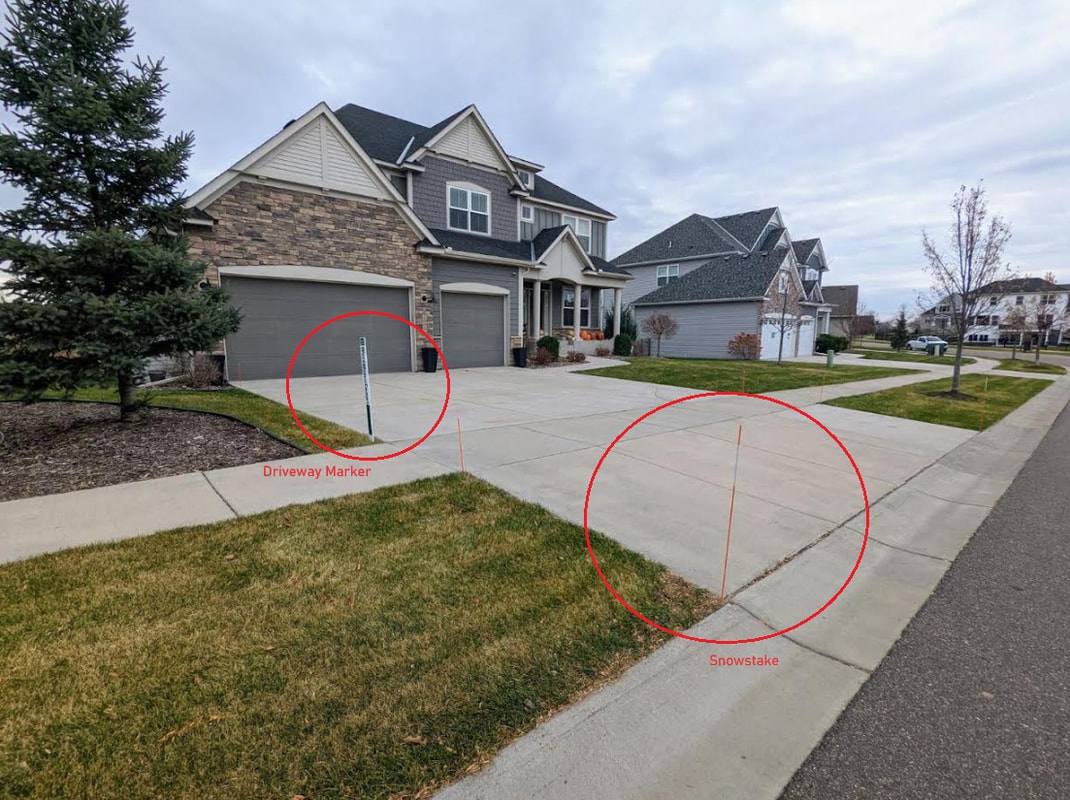
Snow stakes are the orange plastic or fiberglass rods you see along driveways all winter. They run the perimeter and show where the driveway ends and the turf begins.
They protect your property more than they help us. Sod torn up along an unmarked edge, a clipped sprinkler head, a gouged garden border: those are the things stakes prevent. A driveway with no stakes gets cleared conservatively, which means a narrower path and more shovelling for you, or it gets cleared optimistically, which means lawn repair in April.
Driveway markers identify the property
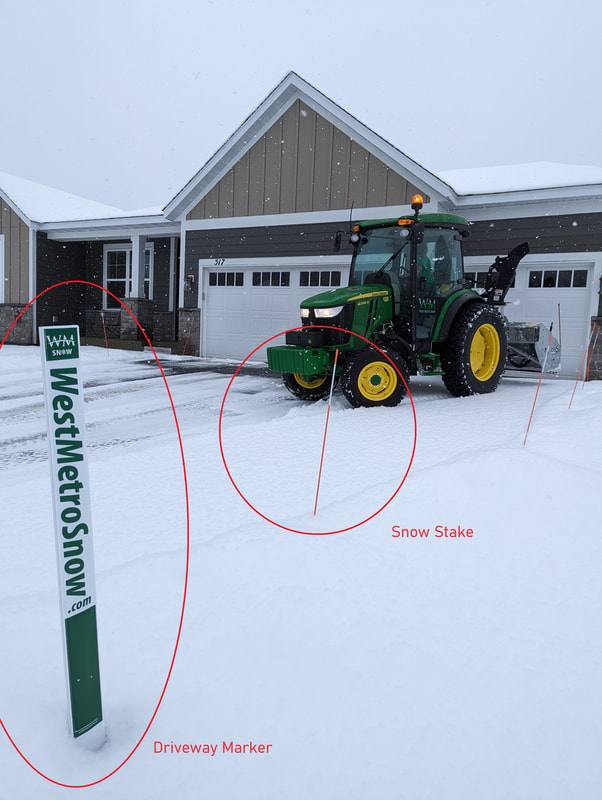
Our driveway markers are a different thing entirely. They are four foot white and green posts carrying our name and logo, and they sit at the entrance so a driver can pick your property out from the road.
That sounds minor. It is not. On a route of dozens of stops in the dark, with mailbox numbers buried and everything looking alike under snow, finding the right driveway is genuinely a large share of the time spent. Since we started using them our response time has improved dramatically.
Both are required to receive service.
Fiberglass or plastic, and where each one goes
We use both, and the choice is about what hits them.
Forty eight inch heavy duty fiberglass stakes go along the road. That end of the driveway takes the city plow wake, which is a wall of dense, fast, heavy snow, and a lighter stake does not survive it. Taller helps too, because the pile at the apron is always the deepest snow on the property.
Thirty two inch rebounding plastic stakes go along the driveway edge. They bend and pop back up if somebody drives over one, and they will not scratch a car door when someone swings wide. Fiberglass in that position is a hazard to your own vehicles.

Installation guidelines if you are doing it yourself
Plenty of homeowners stake their own driveway, and it works fine as long as you follow the spacing.
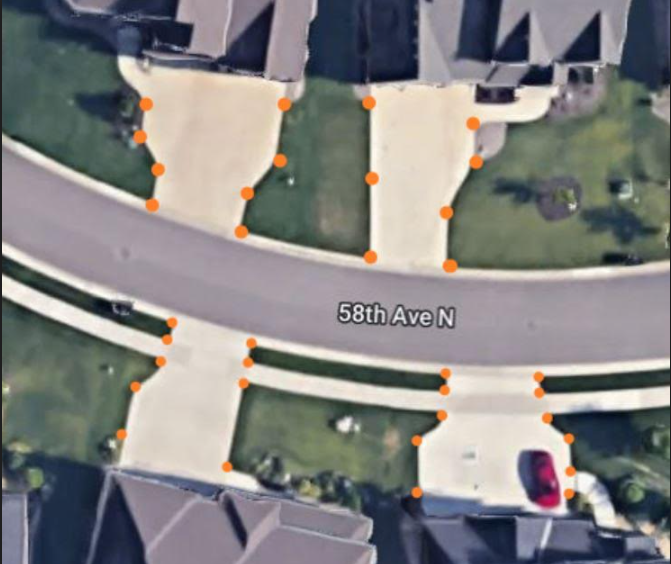
- Space stakes 5 to 10 feet apart along the driveway edge, with the one closest to the street set right on the corner where the driveway meets the road.
- Put a stake at every pivot and turn in the driveway, and at the corners of sidewalks.
- Run at least 3 stakes along each side. Two is not enough to establish a line in the dark.
- Use stakes at least 32 inches tall. Anything shorter disappears in a normal Minnesota winter.
- Sink them at least 6 inches into the ground so they hold when snow loads against them.
- Get them in before the ground freezes. This is the one that catches people out, usually in the first week of November.
Curves are where most self-staked driveways fall short. A straight run reads clearly from two stakes, but a bend needs one at the start, one at the apex and one at the end, or the operator is interpolating a curve from two points in the dark.
What you get if we install them
If you have us stake the property, we replace broken, missing or damaged stakes through the season at no charge, which matters because the ones near the road do get destroyed some winters. We guarantee installation before the first serviceable snowfall, and we pull everything at the end of the season so you are not hunting orange rods out of the turf in April.
Staking is one piece of getting ready. The rest of it, clearance, parking and what to move, is in our driveway prep guide. If you are comparing per push and seasonal, here is why we only offer seasonal contracts.
You can see coverage and scope on our snow and ice service or the Plymouth snow removal page.
Frequently asked questions
Are snow stakes required for snow removal service?
Yes. Both snow stakes along the driveway edge and a West Metro driveway marker at the entrance are required to receive service. The stakes show the operator where the surface ends, and the marker identifies your property from the road in conditions where house numbers are not visible.
How far apart should snow stakes be placed?
Five to ten feet apart along each edge, with the stake nearest the street set on the corner where the driveway meets the road. Add one at every pivot or turn and at sidewalk corners, and run at least three along each side.
How tall do snow stakes need to be?
At least 32 inches, sunk at least 6 inches into the ground. Along the road we use 48 inch heavy duty fiberglass instead, because that end takes the city plow wake and lighter stakes do not survive it.
When is the deadline to install driveway stakes in the west metro?
Before the ground freezes, which in Maple Grove, Plymouth and the surrounding towns usually means late October into the first days of November. Once the frost line sets you cannot get a stake in without a drill and a lot of patience.
What is the difference between fiberglass and plastic stakes?
Fiberglass is rigid and takes a beating, so it goes along the road where the city plow throws heavy snow. Rebounding plastic bends and springs back if it gets driven over and will not scratch a car door, so it goes along the driveway edge where your own vehicles pass.
Do you remove the stakes in spring?
Yes, if we installed them. We collect our stakes and markers at the end of winter, so you are not finding them with a mower in May.