
Most of what slows a snow route down has nothing to do with snow. It is a basketball hoop three feet from the edge, a garbage can left where the plow needs to turn, or a car parked dead center in a two car driveway.
None of that is anyone being careless. People set their driveway up in July and never think about it again. Then the first storm arrives at four in the morning, the operator has thirty seconds of visibility and a route to finish, and every one of those things becomes a decision made in the dark.
Here is what we ask Maple Grove, Plymouth, Corcoran, Rogers and Dayton customers to handle before the first plowable snow, and why each one matters more than it sounds like it should.
Everything here has a deadline, and it is the ground freezing
This is the part people miss. Almost every item on this list has to happen before the frost line sets, and in the west metro that is usually late October into early November in a normal year.
You cannot drive a stake into frozen ground. You cannot dig out a shrub to move it. You cannot fix a soft driveway edge at 28 degrees. Miss the window and you are not doing these jobs late, you are not doing them at all, and the driveway goes into winter the way it is.
So treat October as the deadline, not the first snowfall.
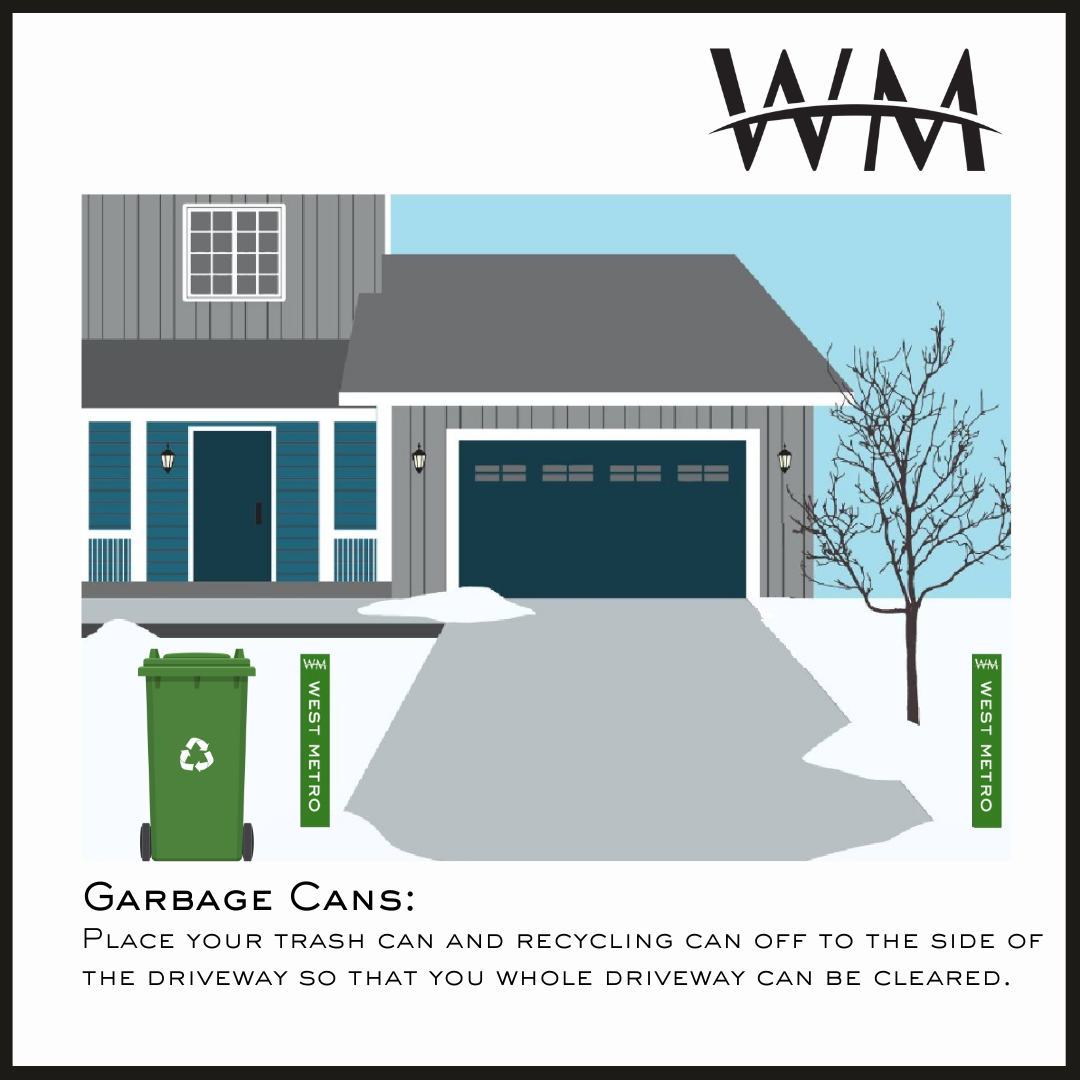
Keep the cans out of the turning area
Garbage and recycling cans are the single most common obstacle we work around. On collection day they end up at the apron, which is exactly where the plow needs room to turn and stack.
Pick one spot, off the driveway surface and back from the edge, and keep them there all winter. Consistency matters more than the exact location, because an operator who has cleared your property four times already knows where to expect them.
Give fixed objects ten feet
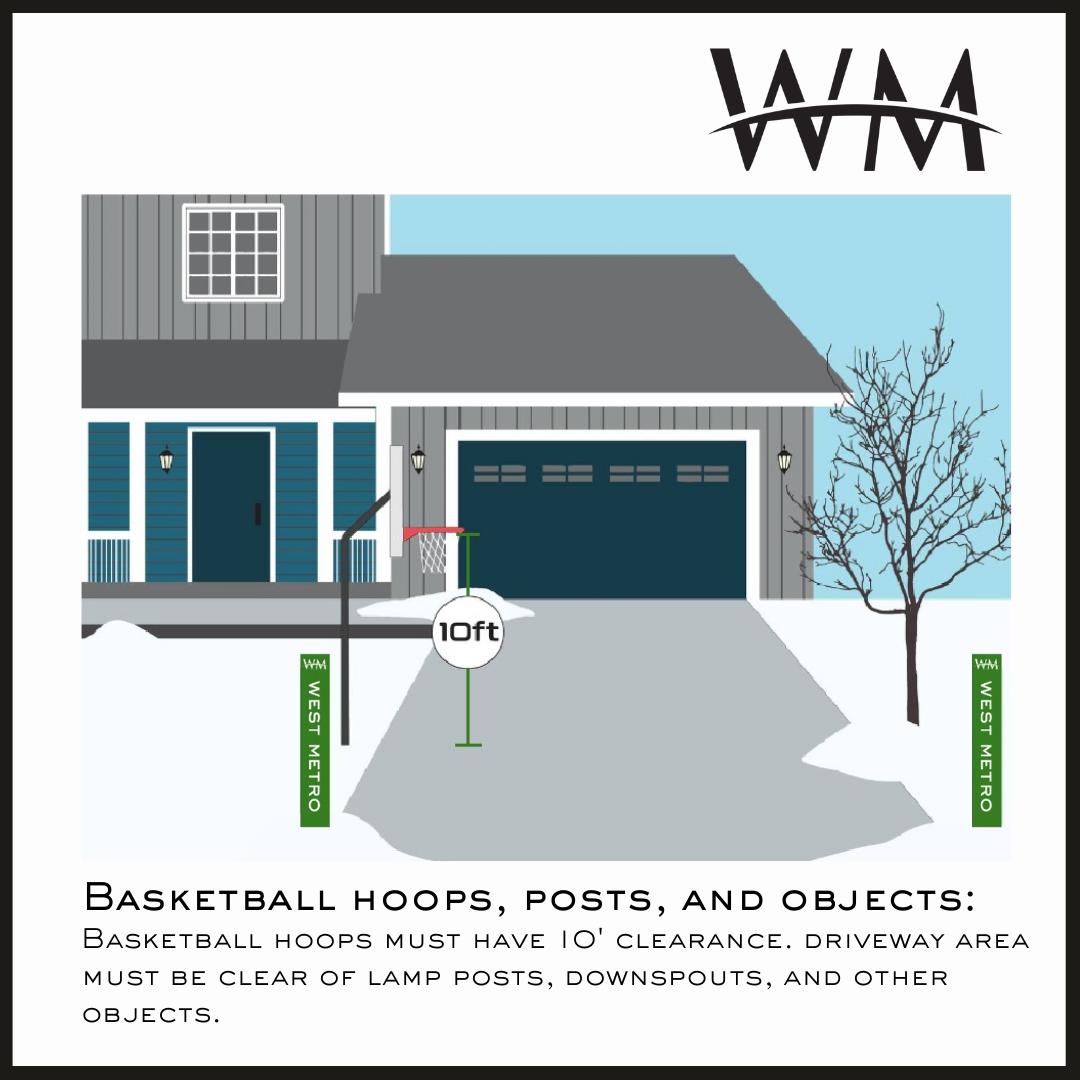
Basketball hoops, lamp posts, retaining wall corners, decorative boulders and landscape lighting all disappear under snow by January.
Anything permanent should sit at least ten feet off the driveway surface. Anything portable, and a basketball hoop on wheels counts, should be moved well back before the season and left there. A hoop base that gets clipped is a bad morning for everyone, and it is the kind of damage that is entirely avoidable in October.
Trim to twelve feet overhead, cover the shrubs, move the pots
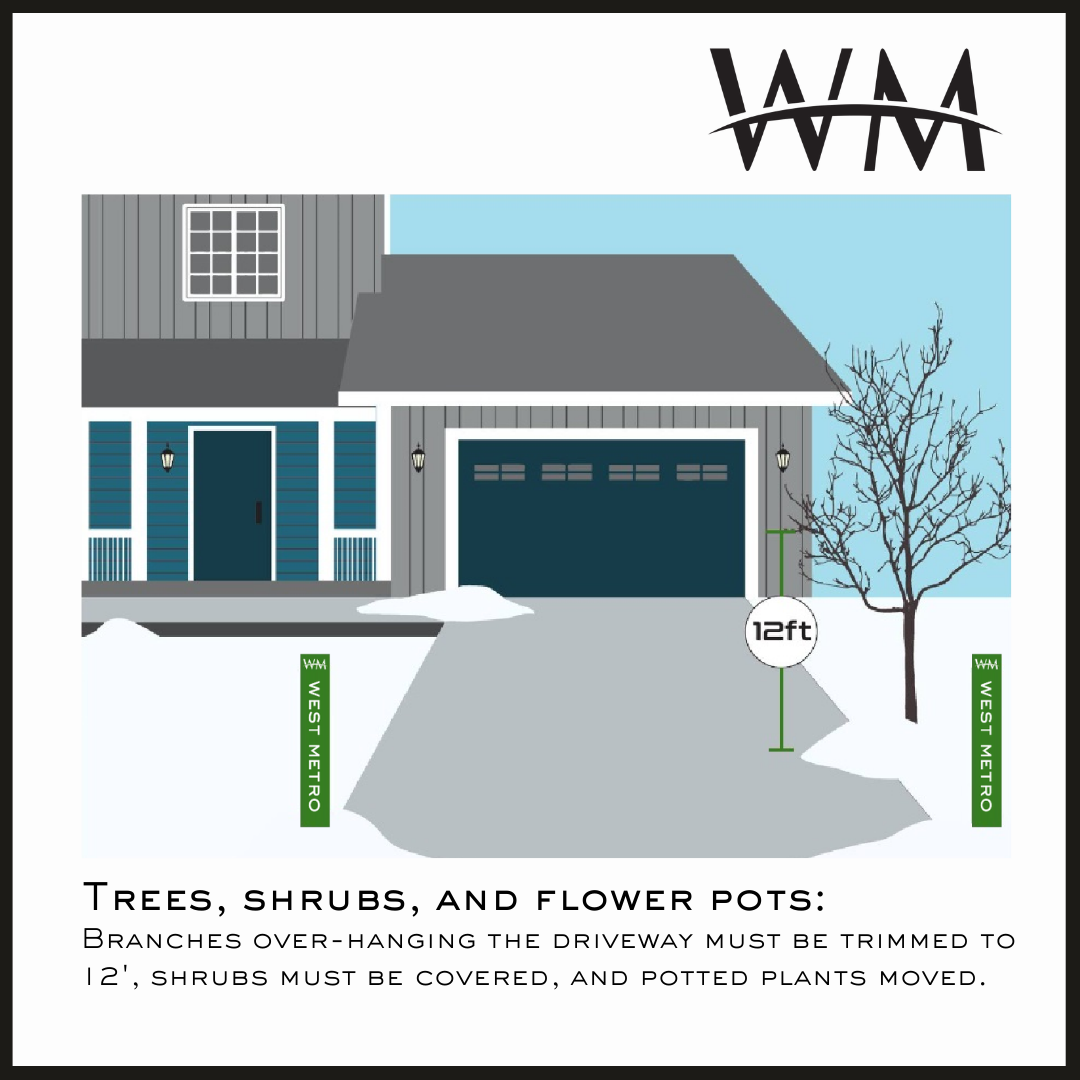
Our equipment needs twelve feet of vertical clearance. Branches that clear a car by plenty will not clear a tractor cab with a blower on the front, and a branch loaded with wet snow hangs a lot lower than the same branch in August.
Shrubs along the driveway edge should be covered or wrapped, both against the snow we move and against salt. Potted plants come inside or go to the back of the property. Anything left at the edge is invisible by the second storm.
Parking is the one you control every single storm
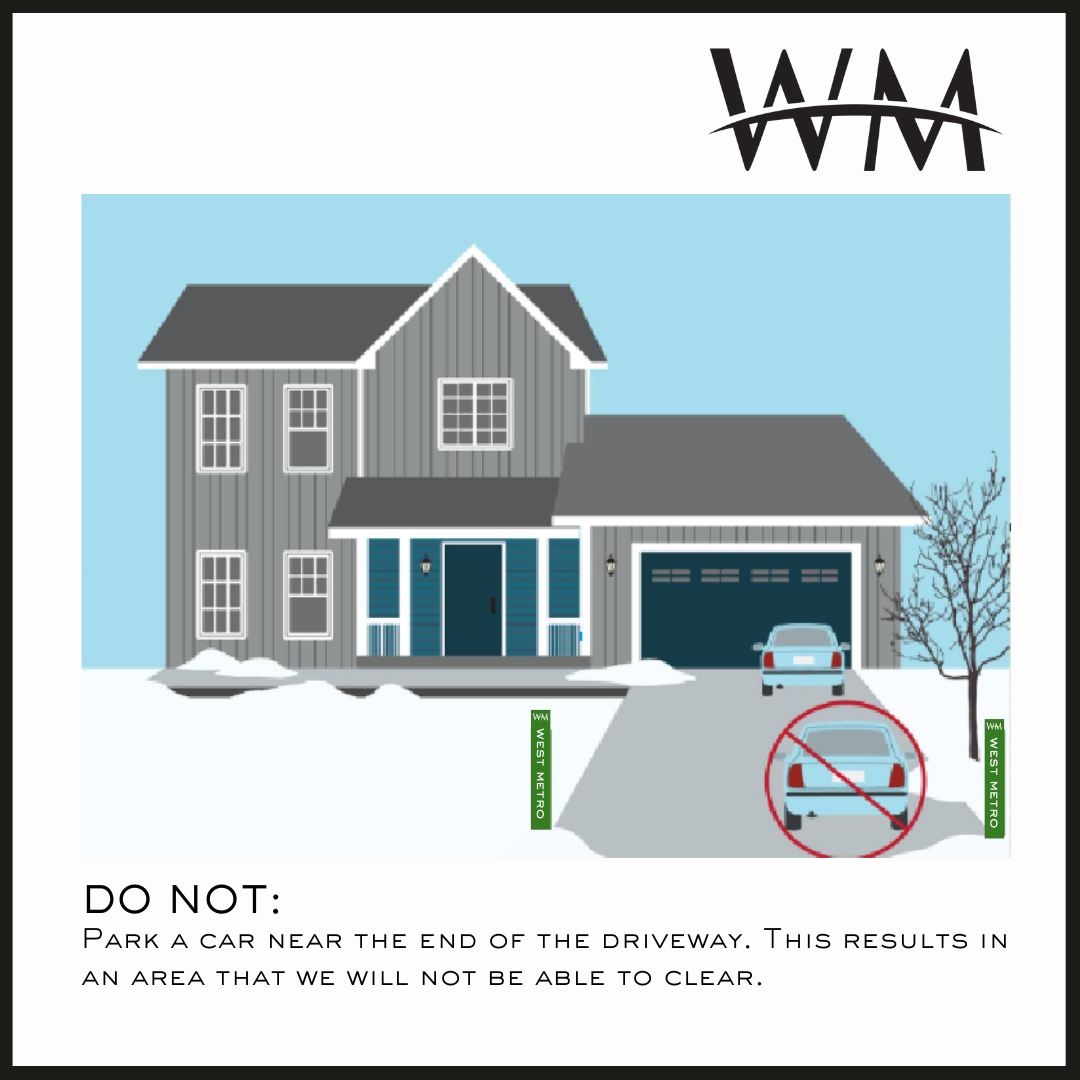
Everything above is a one time October job. Parking is a decision you make again every time it snows, and it has the biggest effect on how well your driveway gets cleared.
The best outcome is an empty driveway. A clear surface gets cleared edge to edge in one pass, and you get the full width of your driveway back.
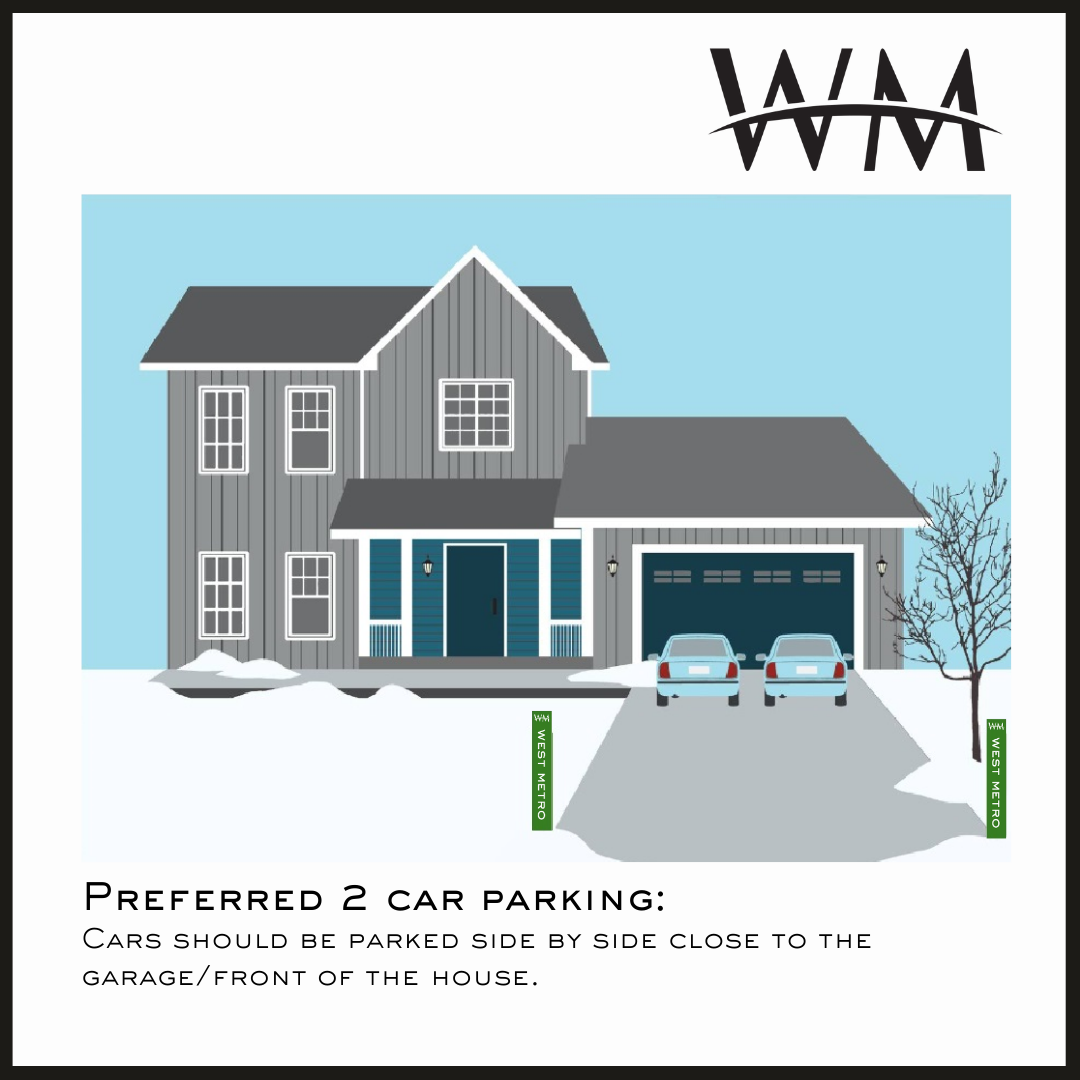
When both cars have to stay out, park them side by side and close to the garage. That leaves the whole lower driveway open and keeps the work in one continuous sweep.
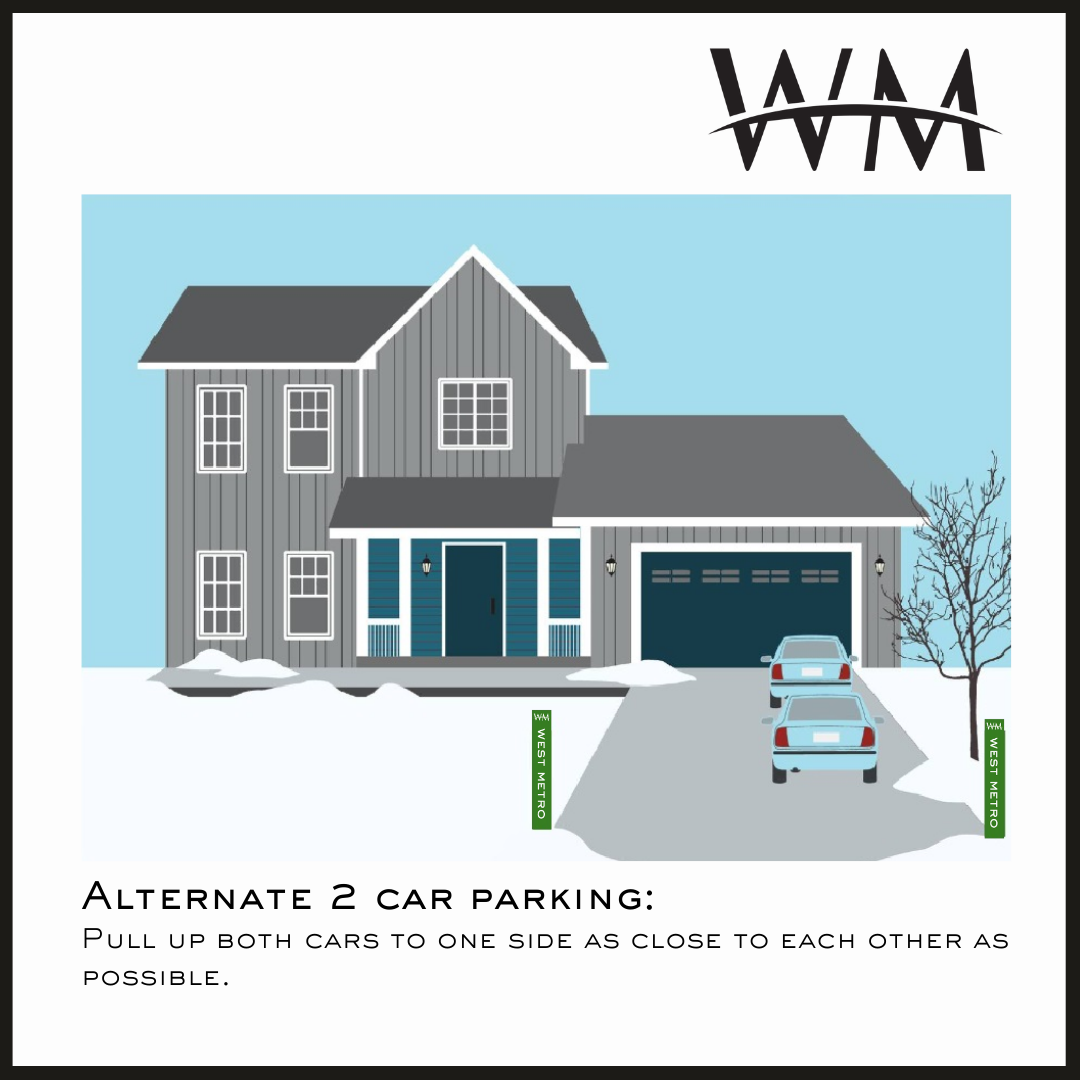
If side by side is not possible, pull both cars to the same side. Two cars split across the driveway leaves nothing usable between them.
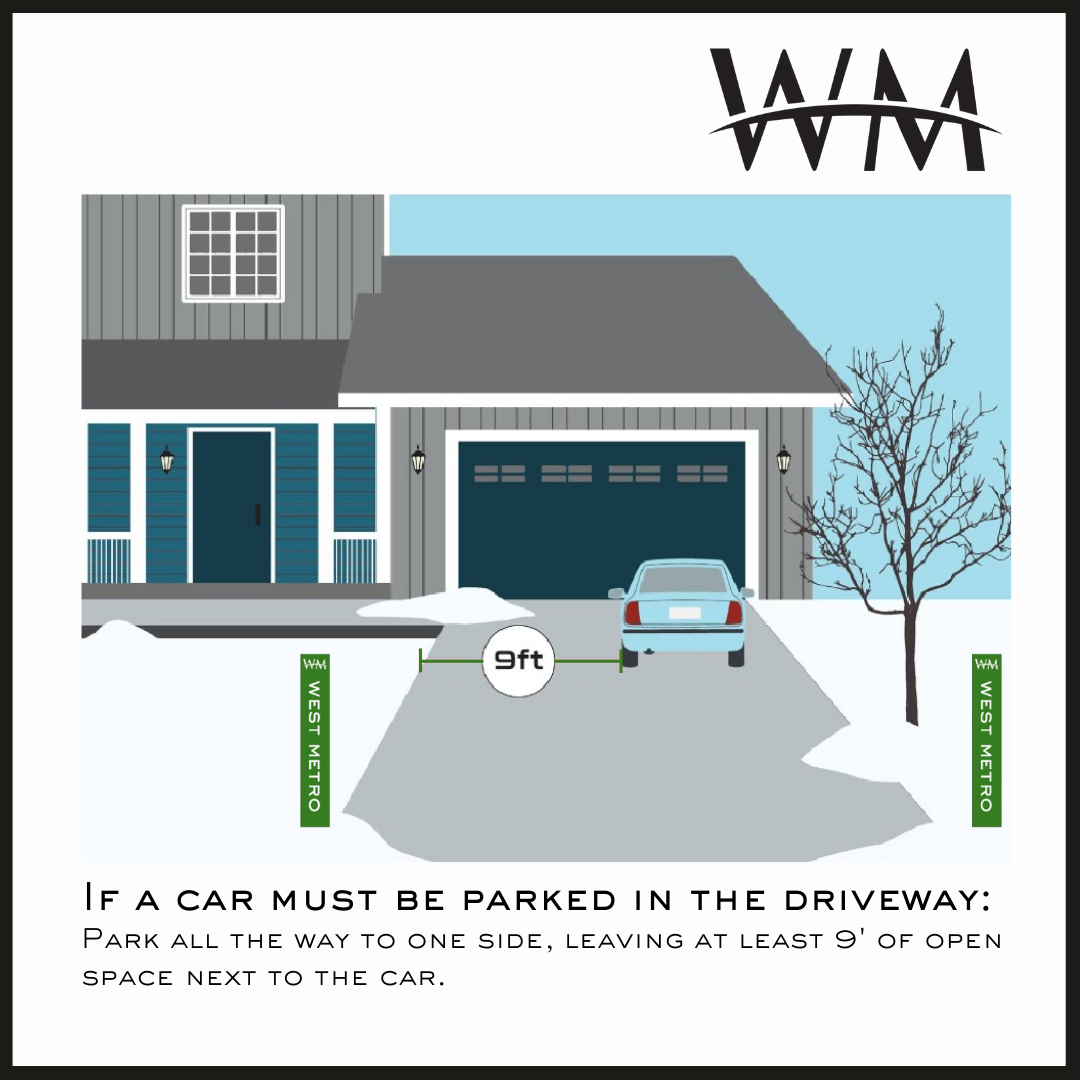
And if a single car has to sit in the driveway, put it hard to one side and leave at least nine feet of open space beside it. Nine feet is what the equipment needs to make a clean pass. Less than that and we clear around the car, which means you are shovelling the rest yourself once you move it.
Mark the edges before anything else
Staking is not on this list because it has its own. After the second storm nobody can see where your driveway ends, including us, and the blade follows what the operator can see.
Our guide to snow stakes and driveway markers covers spacing, height, which type goes where, and why the stake nearest the street is the one that takes the beating from the city plow.
Where this fits
Getting the property ready is half of it. The other half is having a place on a route before the season starts, which is a separate decision and one worth making in September rather than November. We covered why we only offer seasonal contracts, not per push.
If you are new to us, start at our snow and ice service or the Maple Grove snow removal page.
Frequently asked questions
When should I have my driveway ready for snow removal?
By the end of October in most west metro winters. Staking, moving fixed objects and trimming overhead branches all have to happen before the ground freezes, and the Twin Cities usually sees its first measurable snow in November. Some years it arrives well before that.
How much clearance does a snow crew actually need?
Ten feet of horizontal clearance around fixed objects like basketball hoops and lamp posts, twelve feet of vertical clearance for overhanging branches, and at least nine feet of open driveway beside any car that has to stay parked.
Where should I park during a snow event?
Off the driveway if at all possible. If both cars have to stay, park them side by side close to the garage. If that will not work, pull both to the same side. A single car should be hard to one side with nine feet of clear space next to it.
What happens if my driveway is not prepped?
We clear what we can safely reach and leave the rest. That usually means a narrower cleared path, snow left around parked cars, and a driveway that gets tighter every storm as the edges build up. It also raises the risk of damage to whatever is buried out there.
Do you serve my town?
We plow Maple Grove, Plymouth, Corcoran, Dayton, Rogers, Champlin, Medina, Hamel, Loretto, Greenfield, Maple Plain, Long Lake, Orono, Wayzata, Hanover, Rockford, St. Michael, Albertville and Otsego, out of our shop in Maple Grove.