
People call asking for "plowing" when what they really want is a clear driveway. How that driveway gets cleared, with a truck and blade or with a snow blower, makes more difference than most people realize. The right tool depends on the shape of the driveway, what it is made of, and where the snow can go.
We run both on our residential routes across Maple Grove, Rogers, Otsego, Corcoran and the rest of the west metro. Here is how the choice usually plays out.
How a plow clears a driveway
A plow truck pushes snow. It is fast, and on a long or wide driveway nothing else comes close. A rural lot in Corcoran or Greenfield with a few hundred feet of driveway is plow territory.
The tradeoff is that pushed snow has to land somewhere. A plow builds piles at the end of its push, usually at the sides of the driveway or the edge of the turnaround. On a driveway with open lawn on both sides that is no problem. On a driveway hemmed in by a garage, a fence and the neighbor's driveway, there may be nowhere to push, and by February the piles start eating the driveway itself.
A blade also scrapes. On asphalt and broom finished concrete, that is fine. On a surface that can chip or catch, the operator has to adjust.
How a snow blower clears a driveway
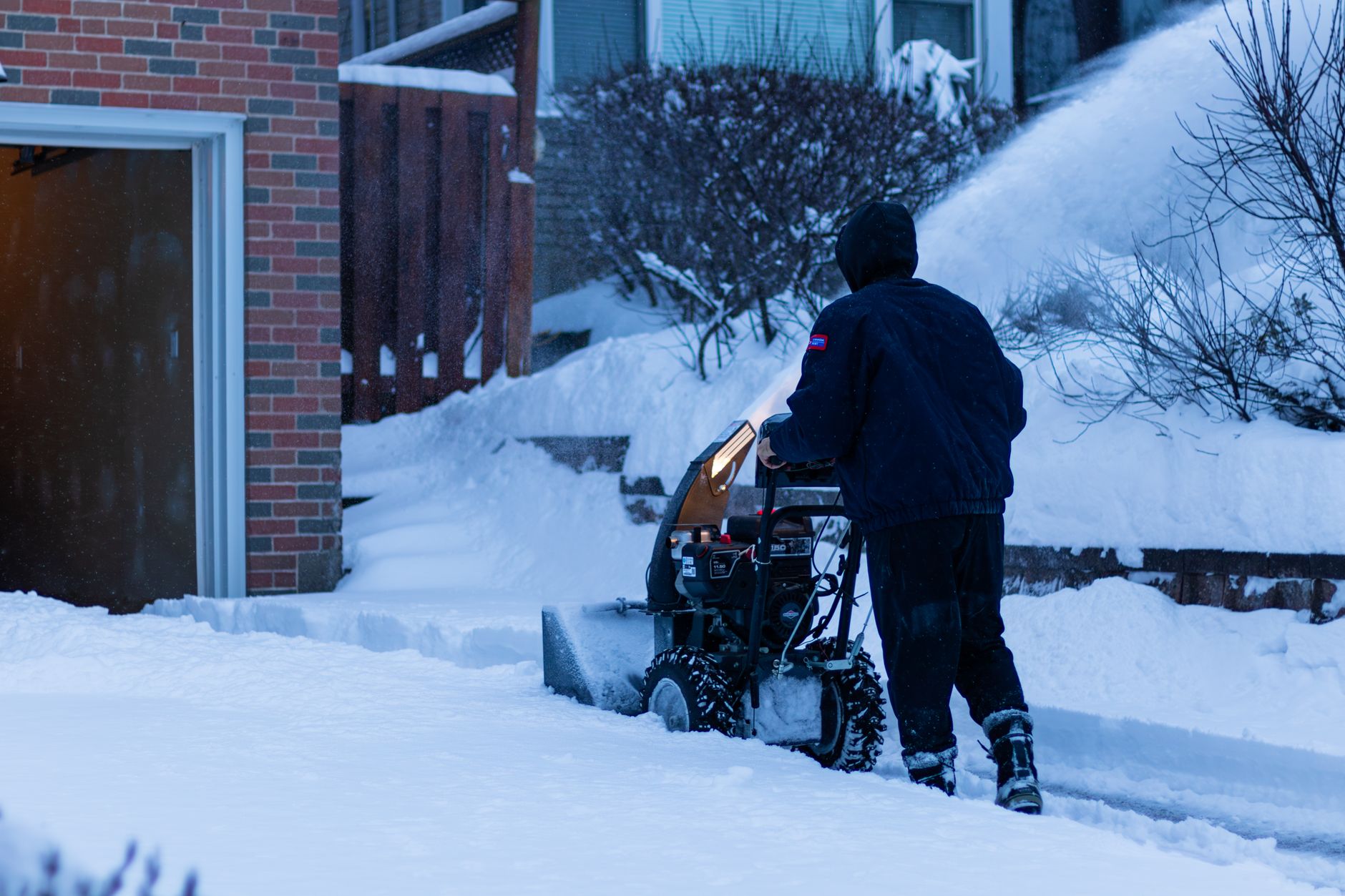
A snow blower throws snow. Instead of building piles at the end of the driveway, it spreads snow across the yard, which is why it works so well on the tight driveways common in newer neighborhoods in Maple Grove and Rogers, where houses sit close together and there is no room to stack.
Blowers also leave a cleaner finish next to garage doors, along walkways, and in corners a truck cannot reach, and they are the right tool for walks and front steps. The tradeoff is speed. On a long driveway a blower is much slower than a truck, and in heavy, wet snow it works hard.
The driveway surface matters
- Asphalt and standard concrete: either tool works. This is most driveways.
- Pavers and stamped concrete: a steel blade can catch a raised paver edge or scuff a decorative finish. Plowing these surfaces calls for a raised blade or a rubber cutting edge, and a blower is often the better fit.
- Gravel: a blade set too low peels gravel off and deposits it on the lawn, where it shows up in April and dulls mower blades. Plows on gravel run with the blade raised slightly, which leaves a thin layer of packed snow. A blower can throw gravel if it is set too low, so it needs adjusting too.
- Heated driveways and fresh concrete: tell your snow company about these before the first storm.
The pile at the end of the driveway
Here is the part nobody likes. After the city plow comes through, it leaves a ridge of snow across the end of your driveway called the windrow. It is heavier and denser than the snow that fell, often mixed with slush and chunks of ice, and it can arrive after your driveway has already been cleared.
Cities around here, like most in Minnesota, plow the street to the curb and leave driveway ends to the homeowner. Ask your snow company how they handle that ridge, and whether a return trip for the windrow is part of the service.
Mark the driveway either way
Whichever tool clears your driveway, the operator needs to know where the edges are once there is a foot of snow on the ground. Stakes along both sides keep the plow off the lawn and the blower out of your landscaping. Our post on staking a driveway for winter explains where to put them.
How we decide
When we set up a residential property, we look at the length and width of the driveway, what it is made of, and where the snow can go, and we match the equipment to it. Walks and front steps are part of the service too. To see what our residential snow removal covers in your city, our Rogers and Maple Grove pages list the details.
Frequently asked questions
Is it better to plow or snow blow a driveway?
It depends on the driveway. Plowing is faster on long, wide driveways with room on the sides to stack snow. Snow blowing is better for short or tight driveways, pavers and stamped concrete, and anywhere there is no space for piles, because it throws snow onto the yard instead of stacking it.
Will a plow damage my paver driveway?
It can if the blade catches a raised paver edge. Pavers and stamped concrete should be plowed with a raised blade or a rubber cutting edge, and many are better suited to a snow blower. Tell your snow company about the surface before the season starts.
Who clears the snow the city plow leaves at the end of my driveway?
The homeowner. Cities in the west metro plow streets to the curb and leave the windrow across driveway ends for residents to clear. Ask your snow removal company whether a return trip for that ridge is included.
How do snow companies plow gravel driveways?
With the blade raised slightly so it rides above the gravel, which leaves a thin packed layer of snow instead of scraping stones onto the lawn. Snow blowers on gravel also need their scraper bar set higher so they do not throw rocks.
Do you offer residential snow removal in Maple Grove and Rogers?
Yes. We clear residential driveways, walks and front steps across Maple Grove, Rogers, Otsego, Corcoran, Plymouth and the rest of the west metro, with seasonal contracts and per push options available.