
What is overseeding?
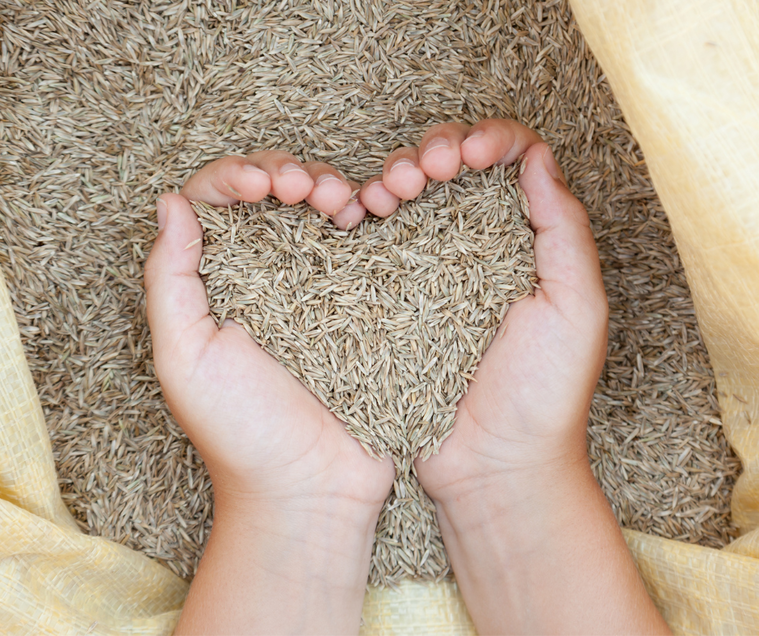
Overseeding means spreading new grass seed into a lawn you already have, without tearing anything out first. No sod, no demolition, no starting over.
It works because a lawn is not one plant. It is thousands of individual grass plants, and they do not all live forever. Traffic, drought, disease and plain age thin the stand out a little more each season. Overseeding puts new plants into the gaps before weeds find them, which is the cheapest weed control there is.
If you are starting a lawn from scratch rather than refreshing one, compare seed against sod before you decide.
Which lawns need it?
Overseeding is the fix for a lawn that is thinning rather than dying. The usual candidates:
- Drought stress, including anything that went dormant and came back patchy
- Insect or disease damage that left bare ground behind
- A lawn that has just gotten tired and open with age
- Turf that needs more water and fertilizer every year to look the same
- Thin strips along driveways, sidewalks and anywhere people cut the corner
If the lawn is failing for a reason that is still active, seed alone will not hold. Grubs cutting roots, a dry corner in the irrigation, or a mower set too low will thin the new grass exactly the way it thinned the old grass. Those get diagnosed first.
Seed quality decides the result
This is the part homeowners get burned on, and it is worth being blunt about.
Cheap seed is cheap because of what is in the bag besides grass. Weed seed, inert filler, and varieties that green up fast and die in their first Minnesota winter. You spend the next three summers pulling out what you paid to plant.
We use a single high-quality blend rather than matching a different mix to every microclimate in a yard, because conditions in a yard never hold still. Trees grow, irrigation coverage shifts, a neighbor takes down a spruce. A blend that performs across a range of conditions holds up where a narrow one fails.
If you are buying seed yourself, read the label before you buy. The weed seed percentage is the number that matters.
When does overseeding work best?
Late summer, and it is not close.
Soil is still warm enough to germinate seed quickly, air temperatures are falling instead of climbing, and the summer weeds have stopped competing for water and space. Seed put down in spring is in a footrace with every crabgrass seed in the soil. Seed put down in late summer is not.
We do overseed outside that window when a lawn needs it, and we tell people honestly how the odds change when they do. The full timing case, including what University of Minnesota Extension recommends and what your options are if you have already missed it, is in when to aerate and overseed your Minnesota lawn.
Aeration and overseeding go together
Seed needs contact with soil to germinate. Seed that lands on thatch mostly feeds birds.
That is why overseeding is paired with core aeration. The machine pulls plugs and leaves thousands of open holes, and seed that falls into one lands on bare soil at the right depth with a bit of shelter. Doing both in the same visit is what makes the seed take.
Does West Metro Lawn & Snow offer overseeding?
We do, paired with core aeration. Get in touch for an estimate, and see the aeration and seeding page for what the service includes.