
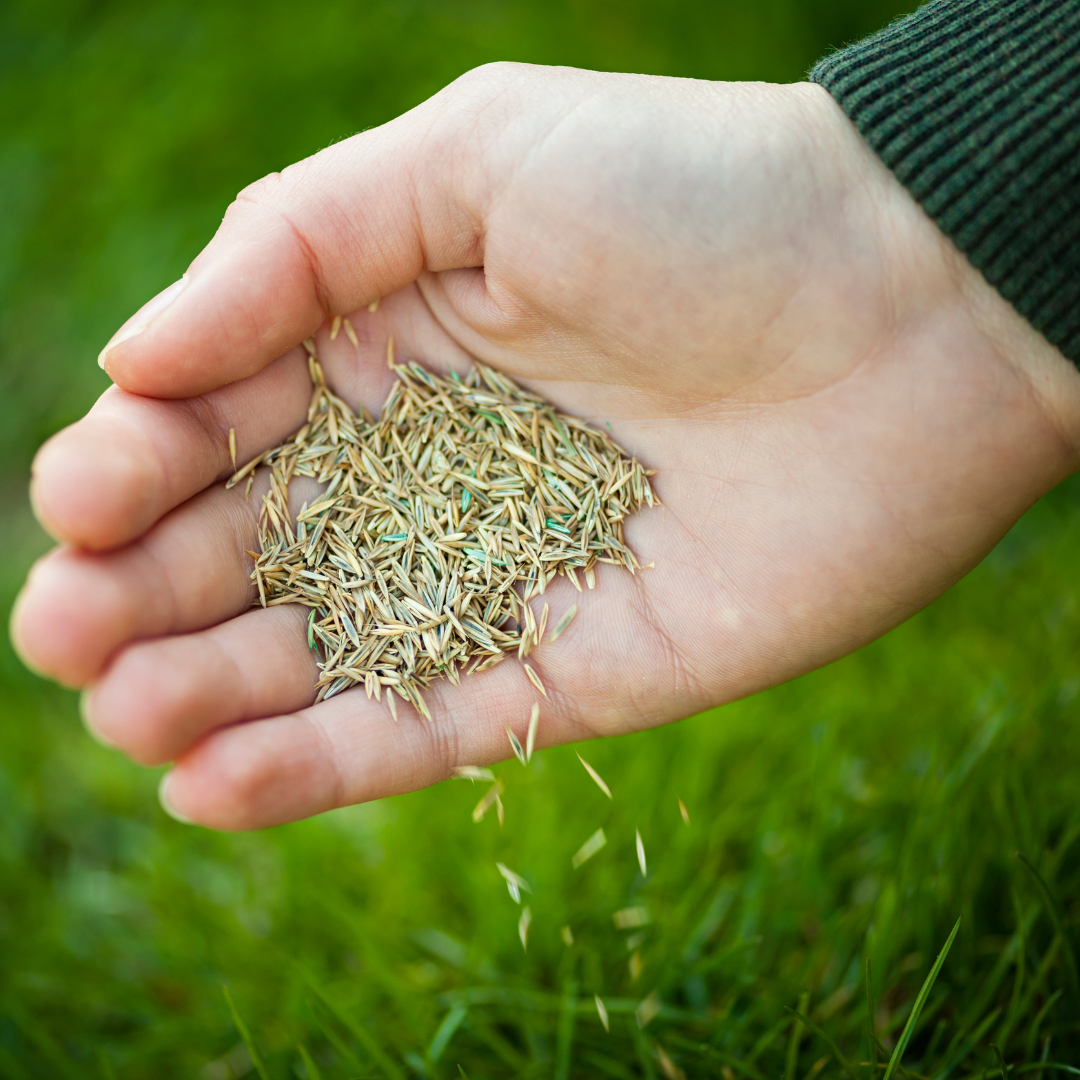
The seed or sod question usually gets answered on price, and price is the least useful way to decide it. The two are not competing versions of the same job. They solve different problems, on different timelines, and in Minnesota the calendar narrows your options more than your budget does.
Here is how we actually talk it through with people in Maple Grove, Plymouth and Corcoran.
Start with the date, not the price
Cool season grass seed needs warm soil and cool air to establish, which in the west metro means a real window from roughly mid August through mid September. Seed going down in that stretch germinates fast, roots before freeze-up, and comes out of winter as an established lawn.
Past the third week of September the odds drop off quickly. Seed will still germinate, but a seedling that has not built a root system before the ground freezes usually does not survive winter, and you pay twice.
Spring seeding works and is the second-best option, with one catch worth knowing: you are seeding into crabgrass germination season, so you cannot apply a crabgrass pre-emergent without also stopping your new grass. Spring seeding means accepting a weedier first year.
Sod has no such window. It can be laid any time the ground is workable and it can be watered, which for a lot of people is the deciding factor all by itself.
What seed is genuinely better at
Cost is the obvious one, and the gap is large enough to matter on a full yard.
The more important advantage is that you choose the grass. Sod in this market is dominated by Kentucky bluegrass, which is beautiful in full sun and mediocre in shade. If you are working under mature maples on the north side of a Plymouth house, a seed blend weighted toward fine fescue will outperform bluegrass sod for as long as those trees are standing. Matching the blend to the site is something only seeding lets you do, and it is worth more over ten years than a fast start is.
Seeded grass also roots into your actual soil from day one, rather than arriving with its own soil layer and having to knit into what is underneath.
If you are buying seed yourself, read the tag before the price. We went through what those numbers mean in how to read the bag before you buy, and the difference between a good blend and a cheap one is mostly invisible at the register.
What sod is genuinely better at
Time and erosion, in that order.
Sod is a lawn on the day it is laid. For a property being sold, a yard that has to be usable for an event, or a family that is not willing to fence off the back yard for six weeks, that is the whole argument and it is a perfectly good one.
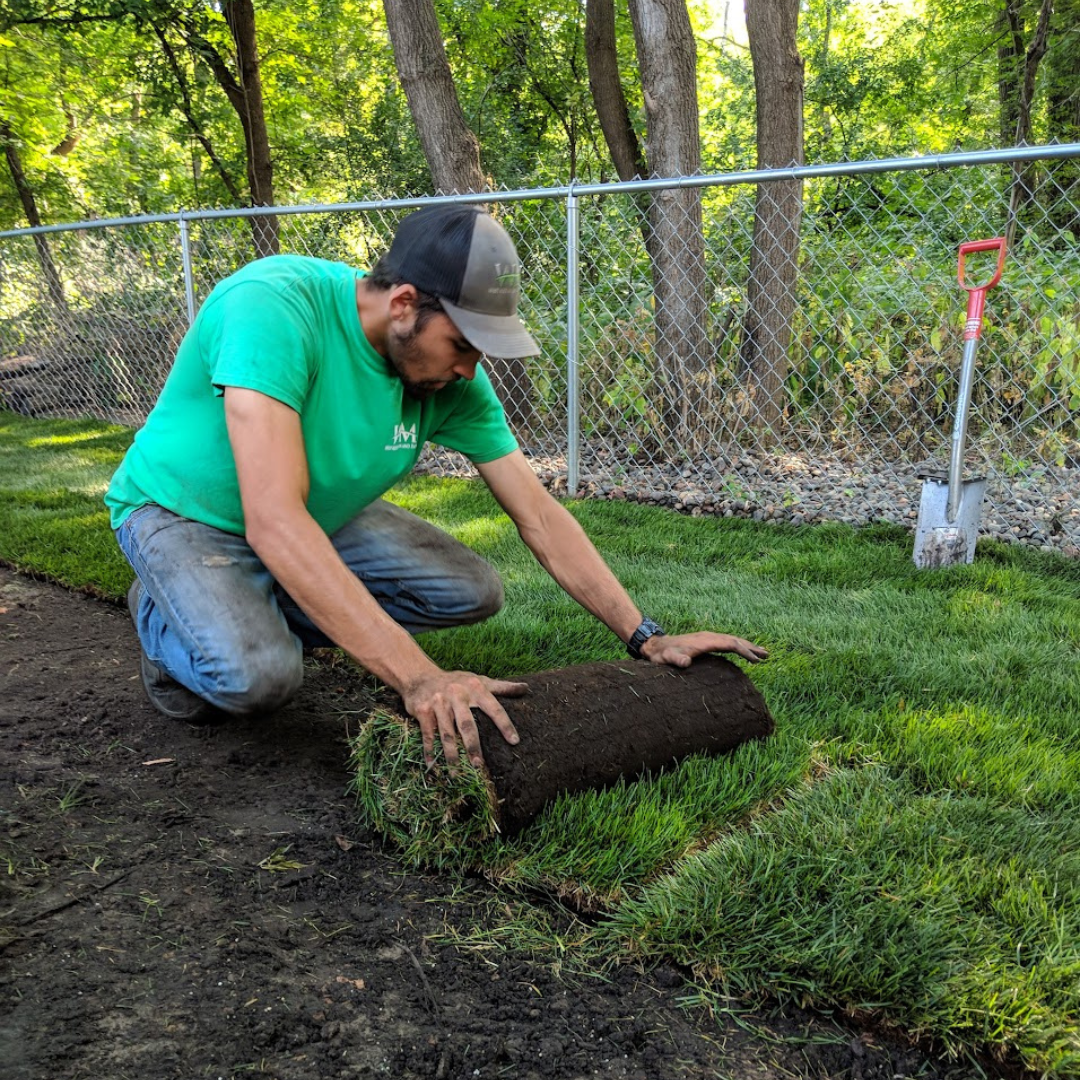
On a slope it is not really a choice. Seed on any meaningful grade washes into the street with the first hard rain, and around here that rain arrives before establishment. Sod holds the soil the moment it is down.
Sod also arrives essentially weed free, which gives you a clean first season instead of a season spent fighting whatever was already in your soil.
The part that decides both outcomes
Whatever goes on top, the result is set by what is underneath.
Most disappointing lawns in this market are not a seed problem or a sod problem. They are a soil problem, and the west metro has a specific version of it. New construction in Rogers, Dayton and Otsego routinely means a thin layer of scraped topsoil over heavily compacted subsoil. Grass on that will look fine for one season and struggle every year after, no matter which method you used or what you paid.
Sod on compacted ground is the worst version, because it can sit and stay green on its own soil layer for months without ever rooting into what is below. It looks successful right up until the first dry August.
Relieving compaction before you start is not an optional extra. Core aeration and seeding exists for exactly this, and a soil test costs almost nothing compared to redoing a lawn.
The third option people forget
If you are reading this in late September and the window has closed, you have one more choice besides waiting until spring.
Dormant seeding means putting seed down in late fall, after soil temperatures have dropped far enough that nothing will germinate, usually November here. The seed overwinters in place, the freeze and thaw cycle works it into the soil surface, and it germinates first thing in spring, earlier than you could get equipment on the lawn.
It is less predictable than a well-timed August seeding and it is not right for every site. But for a bare area that would otherwise sit exposed all winter growing weeds, it is a real option worth asking about.
Either way, feed it
New grass is establishing a root system and needs different support than an established lawn does. A starter feeding at the right time and a proper fertilization and weed control program through the first season is what turns a successful germination into a lawn that holds. Skipping that is how a good seeding gets outcompeted by weeds by mid summer.
Frequently asked questions
Is it too late to seed a lawn in the west metro?
The reliable window runs from roughly mid August to mid September. Past the third week of September the seedlings often lack the root system to survive winter. After that, dormant seeding in November or waiting for spring are the better options.
Is sod or seed cheaper?
Seed is substantially cheaper in materials and installation. That said, the cost of redoing a failed lawn, or of installing either one over compacted soil that was never addressed, dwarfs the difference between the two.
Can I lay sod in the fall in Minnesota?
Yes. Sod can go down any time the ground is workable and you can water it, which makes it the practical choice once the seeding window has closed. It still needs to root before hard freeze, so earlier in fall is better than later.
Which is better for a shady yard?
Seed, usually. Sod in this market is mostly Kentucky bluegrass, which does not love shade. Seeding lets you use a blend weighted toward fine fescue that is matched to the actual light on your property.
Do I need to fix the soil first?
On new construction, almost certainly. Thin topsoil over compacted subsoil is common across Rogers, Dayton and Otsego, and grass installed over it looks fine for one season and struggles after. Relieving compaction before installation matters more than the choice between seed and sod.
How long before a seeded lawn is usable?
Germination in a week or two in good conditions, but keep traffic off it for the better part of a season while the root system develops. Sod is walkable within a couple of weeks and fully knitted in by about a month, which is the trade you are paying for.