
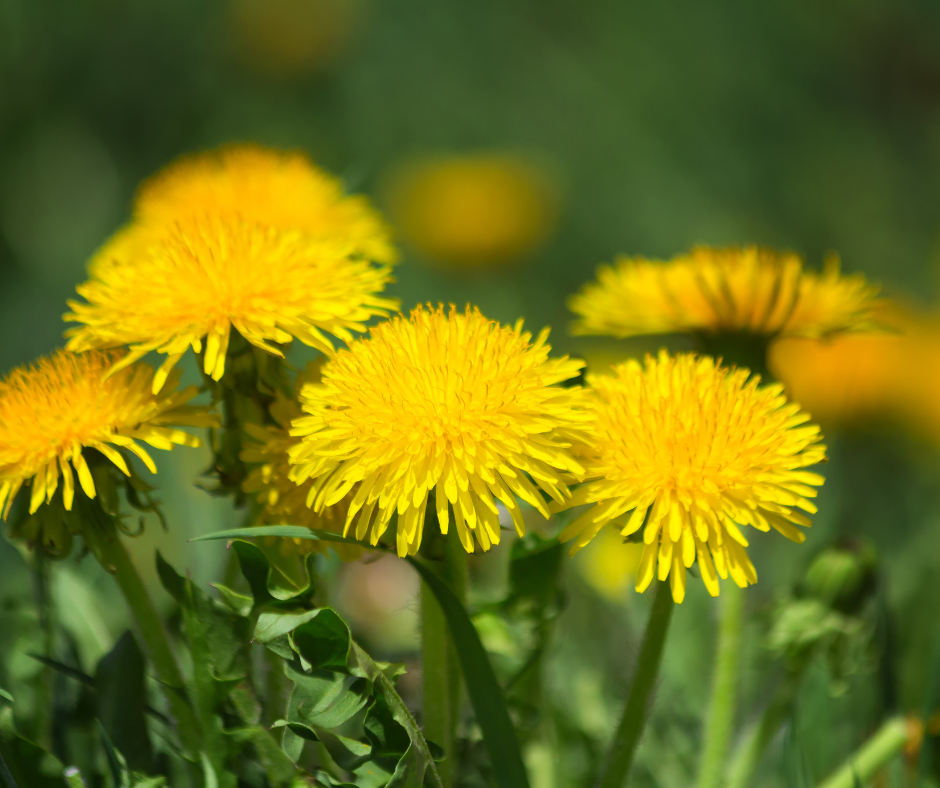
Dandelions are the weed everyone thinks they understand, and the one most people handle in a way that guarantees they come back.
The plant is Taraxacum officinale, a perennial broadleaf found across Minnesota through spring, summer and fall. Spring is when it blooms hardest, which is when the yellow shows up across every lawn on the block at once. It survives our winters without difficulty and it shrugs off July heat, so there is no season where it simply gives up.
Three things about how it lives explain why it beats most of the effort aimed at it.
The taproot is the whole story
A dandelion is not really the rosette of leaves you see. It is a thick taproot, often six to ten inches down and sometimes deeper, with a rosette sitting on top of it.
That is why hand pulling fails. Unless you extract the entire root, and you rarely do, what snaps off in the soil regenerates a new plant from the fragment. People pull a lawn full of dandelions in May, feel good about it, and watch them return through June from roots that never left.
It is also why a contact herbicide that burns the foliage accomplishes nothing lasting. Scorch the leaves and the root sends up another rosette. Anything that works has to be systemic, meaning it moves through the plant into the root.
The seed math is against you
The lifecycle is quick. Seeds disperse on the wind or on shoes and mower tires, germinate in soil, and develop into plants with the familiar jagged green leaves. Those flower, and a bloom becomes a seed head within about fifteen days.
Fifteen days is the number worth holding onto. A yellow flower you notice on a Saturday is a puffball by the middle of the month, and once it is a puffball the seeds are gone. Most land close by. A modest wind carries plenty of them hundreds of feet, which means your neighbour's untreated lawn reseeds yours every spring no matter what you do on your own property.
That reframes the goal honestly. Eradication is not available in a suburban Maple Grove or Plymouth neighbourhood. Suppression, so that your lawn is not the one supplying the seed, absolutely is.

They are telling you something about the turf
Dandelion seed needs light on soil to establish. A dense stand of grass does not offer that. Thin, compacted, scalped or drought-stressed turf does.
So a lawn that is genuinely overrun is usually reporting a condition rather than bad luck: compaction from clay soil or construction, mowing too short, thin areas under trees, or a fertility program that has not kept the stand thick. Treating the weeds without addressing the opening means treating again every year on the same schedule forever.
This is where core aeration and overseeding does more for a dandelion problem than another herbicide pass. Relieve the compaction, thicken the stand, and the seed arriving next spring has nowhere to land.
When to treat, and why timing beats product choice
Because dandelions are perennials living off a taproot, the best treatment window is the one where the plant is moving resources down into that root rather than pushing them up into leaves.
That is fall. From September until a hard freeze, a systemic broadleaf herbicide travels with the plant's own flow and reaches the root. Spring treatment still works, particularly on young plants, but it is a holding action against a root system that is actively feeding the top.
The same principle applies to most of the persistent perennial weeds here, and we walked through it in more depth for creeping charlie, which is the harder cousin of this problem.
Our 7 step fertilization and weed control program is sequenced around this, with blanket broadleaf control on rounds timed to the season rather than to the calendar. The program covers over 250 weed varieties, and dandelions are among the more straightforward of them once the timing is right.
If you are not certain the yellow you are looking at is actually a dandelion, and several Minnesota weeds are commonly mistaken for one, our photo guide to common Minnesota weeds will sort it out.
Frequently asked questions
Why do dandelions come back after I pull them?
Because the plant lives in a taproot that often runs six to ten inches deep. Hand pulling nearly always snaps the root and leaves a fragment behind, and that fragment regenerates a new rosette within weeks. Removing the entire root is the only way pulling works, and on an established plant that is difficult.
When is the best time to treat dandelions in Minnesota?
Fall, from roughly September until a hard freeze. Perennial weeds move resources down into their roots heading into winter, and a systemic herbicide applied then travels with that flow and reaches the whole plant. Spring treatment works on young plants but is more of a holding action.
How fast do dandelions go to seed?
About fifteen days from bloom to seed head. That is why a lawn can look clean one weekend and be covered in puffballs the next, and why mowing before the heads open matters if you are trying to limit spread.
Can I ever fully get rid of dandelions?
Not in a suburban neighbourhood. Seed blows in from every untreated lawn nearby, so eradication is not a realistic target. A consistently treated lawn with dense turf stops being a source of seed and stays clean enough that the arrivals never establish.
Why does my lawn have so many dandelions when my neighbour's does not?
Usually turf density. Dandelion seed needs light reaching soil to establish, so thin, compacted or closely mown lawns give it openings that a thick stand does not. Compaction and mowing height are worth checking before assuming the herbicide failed.
Do you treat dandelions in my town?
We run fertilization and weed control across Maple Grove, Plymouth, Corcoran, Dayton, Rogers, Champlin, Medina, Hamel, Loretto, Greenfield, Maple Plain, Long Lake, Orono, Wayzata, Hanover, Rockford, St. Michael, Albertville and Otsego.