
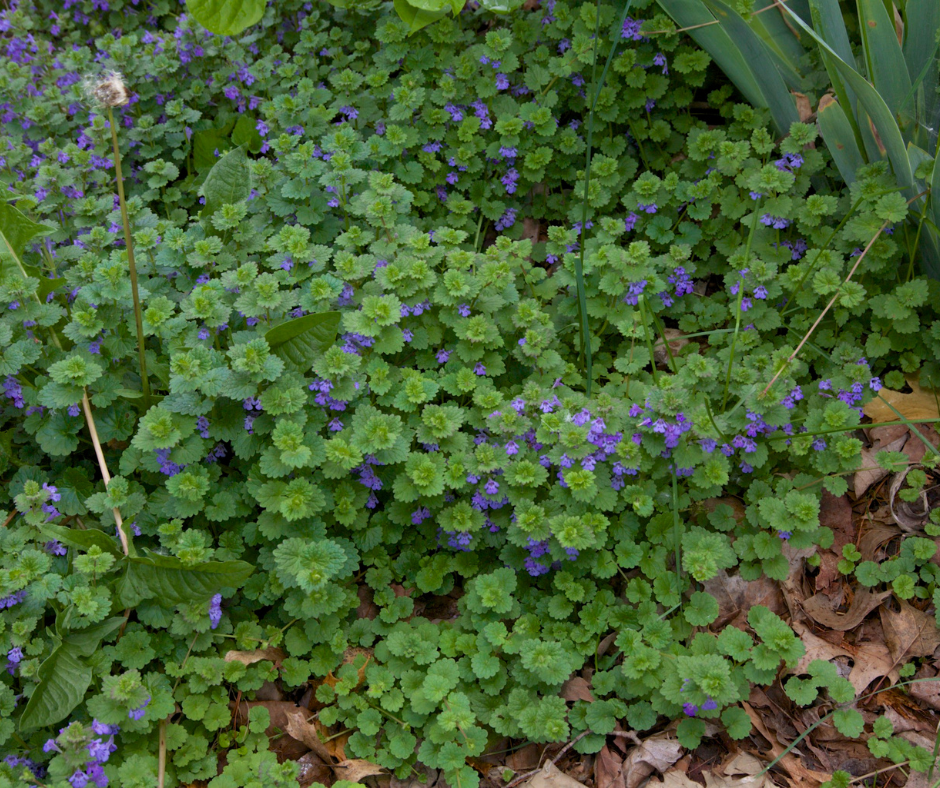
Most people declare war on creeping charlie in May, which is understandable. That is when it flowers, so that is when you notice the purple haze spreading through the shady side of the yard.
May is also close to the worst time to fight it.
The window that actually works opens now. From September until the ground freezes hard, a perennial weed like this one is pulling energy down out of its leaves and into its root system for the winter. Anything applied to the foliage rides along with it. Treat in spring and you burn off the top growth while the roots sit there untouched, which is exactly why it comes back looking healthier than the grass around it.
Knowing you have it
Creeping charlie, also called ground ivy, is easy to identify once you know the tells.
The leaves are bright green, round to kidney shaped, with scalloped edges. It spreads along the ground on creeping stems rather than growing upright. In spring it puts out small bluish purple funnel shaped flowers. Crush a handful and it smells strongly of mint, which is the giveaway, because it is in the mint family. The stems are square if you roll one between your fingers.
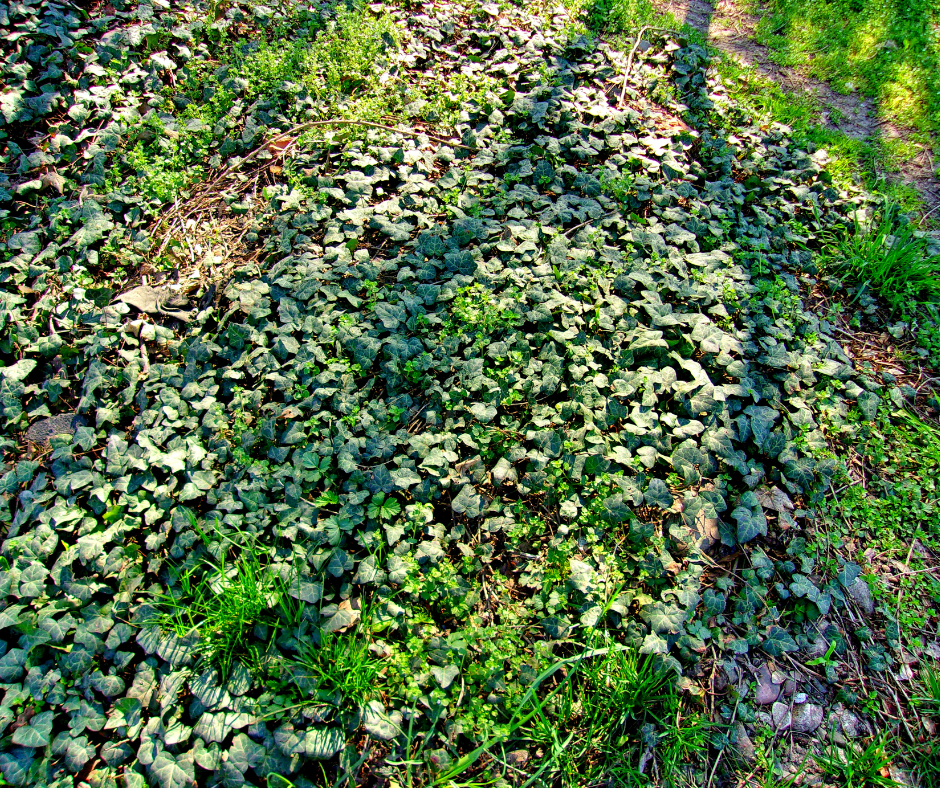
It is a broadleaf weed, and like every broadleaf weed it wins ground by displacing turf. What makes this one worse than a dandelion is how it travels. A dandelion holds one spot. Creeping charlie runs.
Why it keeps coming back
Two reasons, and they are both structural.
The first is how it reproduces. Those creeping stems root at the nodes wherever they touch soil. Every node is a new plant waiting to happen. Pull a handful by hand and you almost certainly leave fragments behind, and each fragment restarts. Mowing is worse, because the mower chops the stems and distributes the pieces across the lawn.
The second is where it grows. It thrives in moist, shaded ground, which is the one place turf is weakest. Under a mature maple on the north side of a Plymouth or Maple Grove house, grass is thin and struggling and creeping charlie is perfectly comfortable. It is not out-competing healthy turf so much as occupying the space healthy turf never claimed.
That second point matters for expectations. Chemical control clears what is there. If the shade and moisture that invited it are unchanged, it will keep pushing back in from the edges.
What actually works
A systemic broadleaf herbicide applied in fall, while the plant is moving carbohydrates to its roots, is the treatment that reaches the whole plant instead of just scorching the leaves. Our fertilization and weed control program runs seven steps across the season, and the fall rounds are built around exactly this: blanket broadleaf control at the point in the year when perennial weeds are most vulnerable.
Expect it to take more than one season. Creeping charlie that has been established for years in a shaded back corner does not clear in a single application, and anyone promising that is selling you something. A meaningful knockdown in year one and a manageable lawn by year two is a realistic outcome.
Alongside the chemical side, the long term defense is turf density. Thick grass leaves nowhere for a creeping stem to root. That means mowing high through the season, feeding properly, and overseeding thin areas in late summer so the canopy closes.
In genuinely deep shade, be honest with yourself about what grass will do there. Sometimes the right answer is a bed with mulch rather than a losing fight to grow turf under a canopy that will not let it.
Do not confuse it with the other spreaders
Creeping charlie gets blamed for a lot of damage it did not do. Round scalloped leaves and square stems are creeping charlie. If you are looking at something grassy spreading through the lawn instead, that is a different problem with a different solution, and we sorted through the distinction in broadleaf weeds versus undesirable grasses. Our photo guide to common Minnesota weeds helps if you are not certain what you have.
Getting that identification right changes the entire treatment plan, because the products that control broadleaf weeds do nothing to a grassy invader.
Frequently asked questions
When is the best time to treat creeping charlie in Minnesota?
Fall, from roughly September until a hard freeze. Perennial weeds move carbohydrates from their leaves down into their roots to overwinter, and a systemic herbicide applied then travels with that flow and reaches the whole plant. Spring treatments knock back the visible top growth while leaving the root system intact, which is why it looks like nothing worked.
Can I pull creeping charlie by hand?
Not effectively on any real patch. It roots at the nodes along its creeping stems, so any fragment left behind restarts the colony. Hand pulling works for a plant or two at the edge of a bed, not for an established area of lawn.
Does mowing get rid of creeping charlie?
No, and it usually makes it worse. Mowing chops the creeping stems into pieces and spreads them across the lawn, where they root wherever they land.
Why does creeping charlie grow in my shady areas?
It prefers moist, shaded ground, which is the same ground where turf struggles most. In a Maple Grove or Plymouth yard that usually means the north side of the house or under mature trees. It is filling space the grass was never going to hold, which is why the underlying shade and drainage matter as much as the treatment.
How long does it take to get rid of creeping charlie?
Plan on more than one season for an established patch. A well timed fall application gives a real knockdown in the first year, and follow up treatments plus thicker turf get you to a manageable lawn from there. Anyone promising a single-visit fix is overselling it.
Do you treat creeping charlie in my town?
We run fertilization and weed control across Maple Grove, Plymouth, Corcoran, Dayton, Rogers, Champlin, Medina and the rest of the west metro, out of our shop in Maple Grove.