
Every crabgrass plant that took over your driveway edge last August is dead right now. The first hard frost killed it. What survived is the seed it dropped before it died, sitting in the top of your soil under the snow, waiting for spring. That is why the crabgrass fight for 2027 gets won or lost in a few weeks next spring, and why December is a good time to plan for it.
Here is how crabgrass works in a Minnesota lawn, when the preventer has to go down, and what to do if you are also planning to seed next spring.
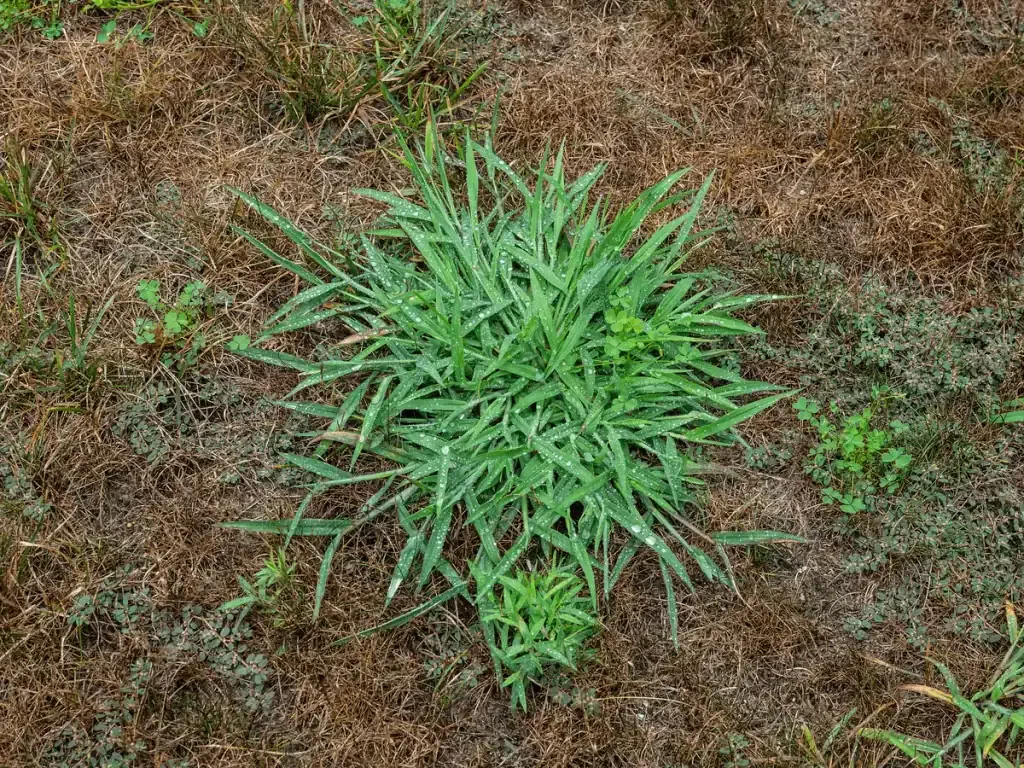
Crabgrass is an annual, and that changes everything
Most lawn weeds you fight in the West Metro, like dandelions and creeping Charlie, are perennials. They come back from the same roots every year. Crabgrass does not. The University of Minnesota Extension puts it plainly: "Crabgrass drops its seed and dies by the first frost, returning in the spring."
So every spring is a fresh start from seed. If you stop those seeds from coming up, you have no crabgrass that year. If you miss them, you are chasing full grown clumps all summer, and those are much harder to kill.
The 55 degree rule
Crabgrass preventer is a pre-emergent. It forms a barrier at the soil surface that stops seeds as they sprout. It does nothing to a plant that is already up. That means timing is the whole game.
University of Minnesota Extension says to apply pre-emergent herbicides before soil temperatures reach approximately 55°F, and to water them in after application. Without water, the product sits on top of the soil and seeds can sprout underneath it. In a typical West Metro spring, the soil gets close to that mark sometime between mid April and early May, earlier on a south facing slope or along a driveway, later in a shaded backyard.
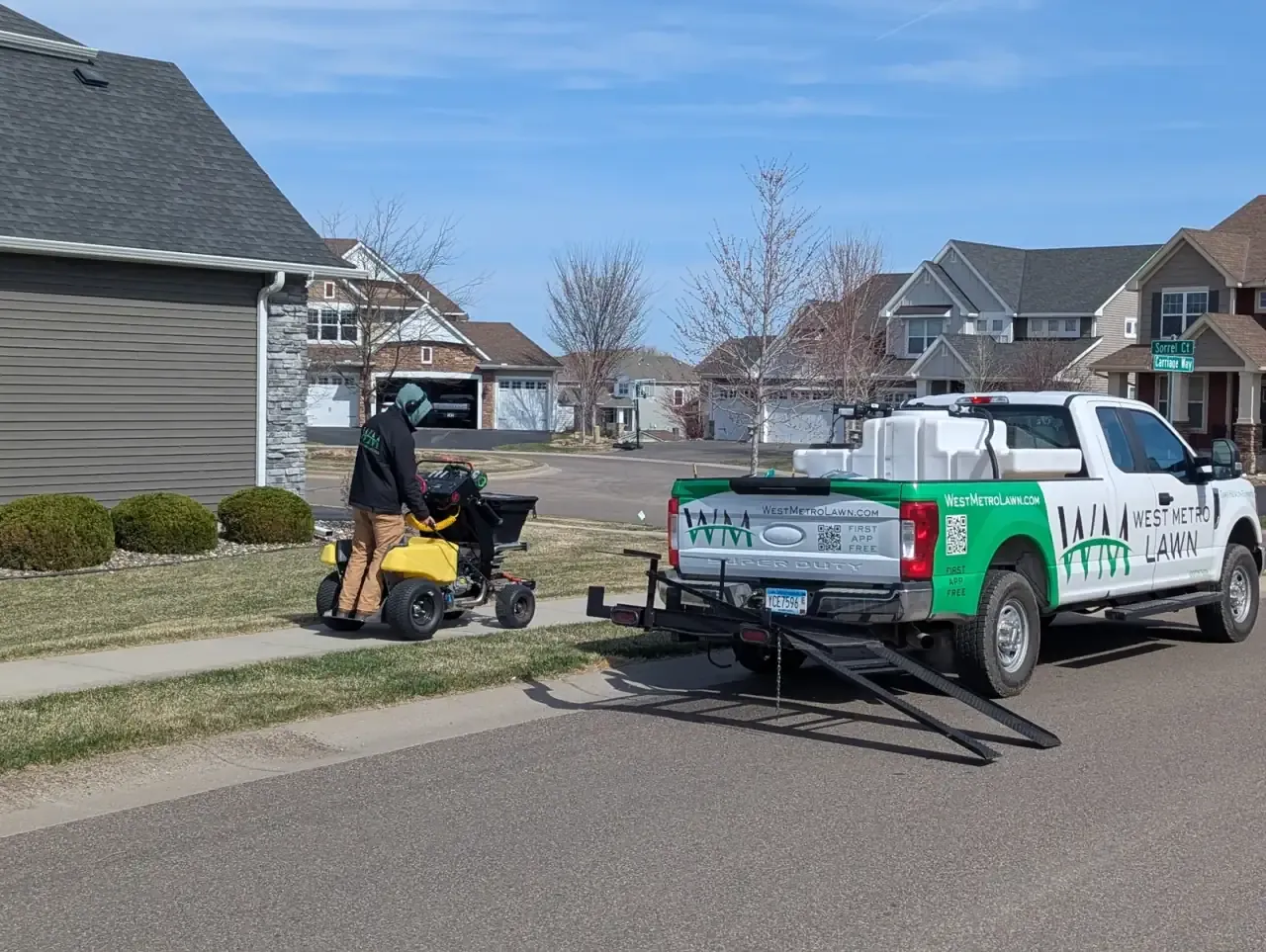
Those hot edges matter. Crabgrass loves the strip where lawn meets pavement, because concrete and asphalt warm the soil faster than the middle of the yard. That is the spot where a granular product often misses, since granules bounce off the curb or never land in the last few inches of turf. On our program, round one of crabgrass preventer goes down as a liquid so we get full coverage right up to those edges.
Why one application usually is not enough
A pre-emergent barrier breaks down over time. Crabgrass seed does not all sprout on the same day, and a cool, wet spring can stretch germination well into early summer. If your only barrier went down in early April, it may be thin by the time the late seeds wake up.
That is why our fertilization and weed control program includes a second round of crabgrass preventer in the next visit, following the manufacturer's recommendation for extended coverage. After that come two rounds of crabgrass control aimed at anything that slipped past the barrier and germinated anyway.
If you have been buying a combo bag from the hardware store, our post on weed and feed in Minnesota explains why that single spring application tends to come up short on crabgrass and broadleaf weeds both.
Everyone remembers crabgrass in March
Search data for Minnesota tells the story. Almost nobody looks up crabgrass preventer in December. Then the snow melts, people see last year's bare spots along the driveway, and searches jump.
March is when the questions start. By then, the lawn care calendars in the West Metro are filling fast, and the first round has to land on time. Signing up over the winter means your first visit is already on the route when the soil starts warming, with no scramble to squeeze it in before the window closes.
If you are planning to seed next spring
This is the conflict most people do not know about until it bites them. Crabgrass preventer stops grass seed too. University of Minnesota Extension advises against applying pre-emergents if turfgrass is weak or has been recently seeded.
So you have to pick. If your lawn has thin areas that need seed, you can seed in spring and accept more crabgrass risk that year, or you can run a full crabgrass program in spring and do your aeration and overseeding in late summer, when crabgrass is no longer germinating. For most lawns with a crabgrass history, the late summer seeding is the cleaner plan. Tell us which way you are leaning when you sign up and we will build the year around it.
Mowing height does part of the work
The cheapest crabgrass control is a taller lawn. University of Minnesota Extension notes that raising mowing heights to at least 3 inches helps decrease crabgrass seed germination. Taller grass shades the soil, keeps it cooler, and leaves the seeds less light to work with. Our mowing crews cut at 3 to 3.5 inches for that reason, and if you mow yourself, setting the deck up a notch next spring is free.
The last thing to know: once crabgrass is big, herbicides lose. Extension says treating crabgrass with herbicides after early July in Minnesota is ineffective and not recommended. Past that point, the plan is to live with it until frost and get the preventer down on time next year.
Frequently asked questions
When should I put down crabgrass preventer in Maple Grove?
In Maple Grove and the rest of the West Metro, crabgrass preventer should be down before the soil reaches about 55°F, which usually happens between mid April and early May. Driveway edges and south facing slopes warm first, so those areas need coverage earliest.
Is crabgrass dead in the winter?
Yes. Crabgrass is an annual that dies at the first frost. It comes back each spring from the seed it dropped the summer before, which is why a pre-emergent in early spring is the most effective control.
Can I put crabgrass preventer down and seed my lawn the same spring?
Usually not. Crabgrass preventer stops grass seed from sprouting as well as crabgrass. If you need to seed, the safer plan is a full spring crabgrass program followed by aeration and overseeding in late summer.
How many crabgrass preventer applications does a lawn need?
Two is the standard on our program. A first round goes down in early spring and a second round extends the barrier for late germinating seed, followed by crabgrass control for anything that still comes up.
How much does crabgrass control cost?
On our lawn program, crabgrass preventer and crabgrass control are built into the regular program visits. Pricing depends on lawn size, and we quote it free from satellite imagery, so no site visit is needed.