
What is core aeration?
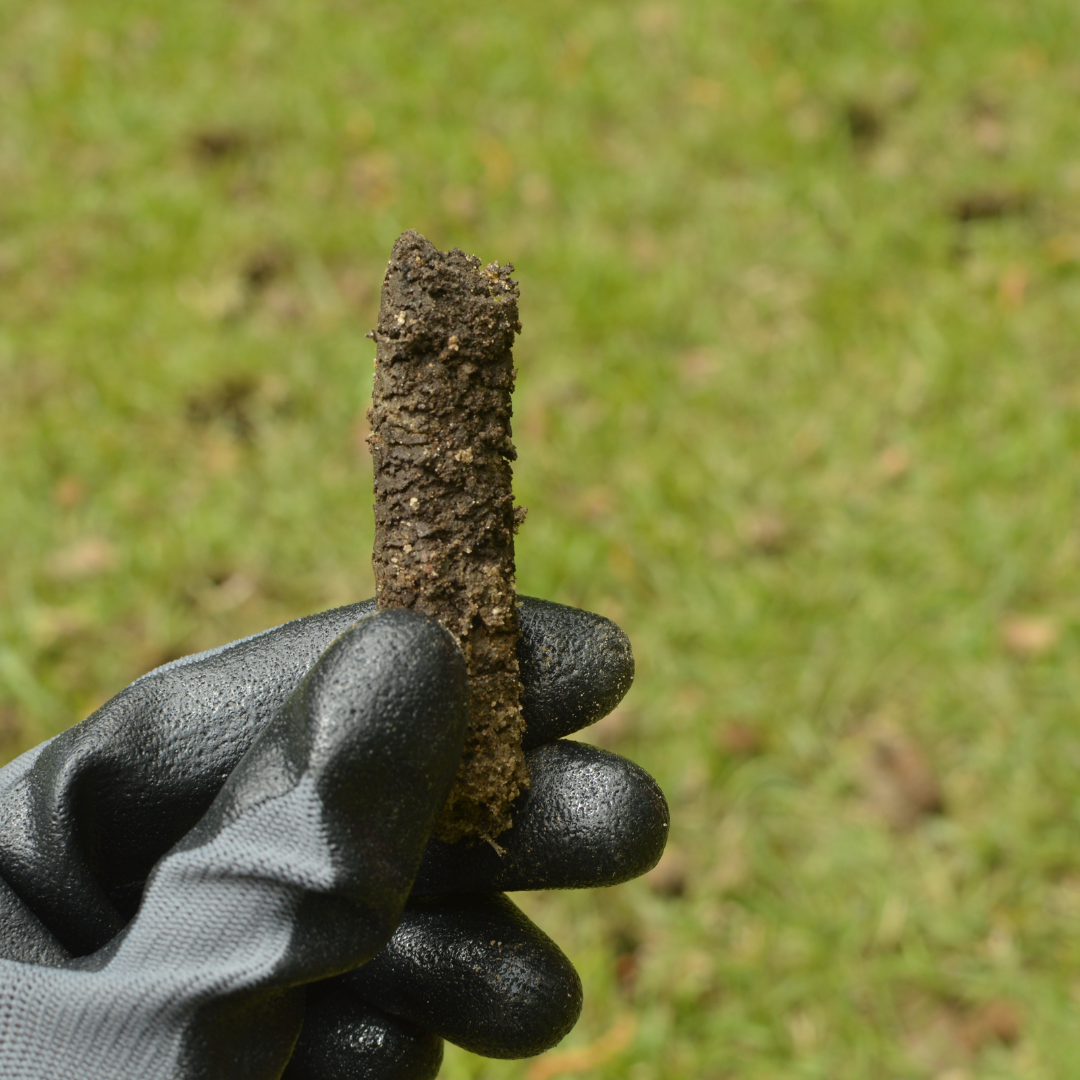
Core aeration pulls small plugs of soil out of your lawn and drops them on the surface. That is the whole mechanic, and it is the reason the service works.
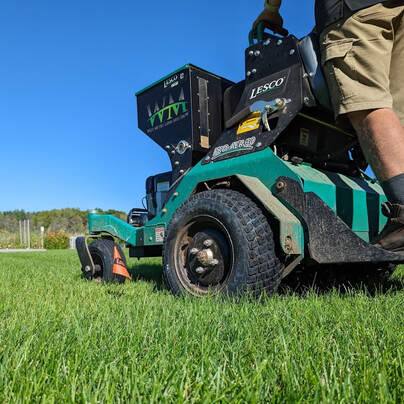
A hollow-tine machine punches into the ground and removes a core rather than just making a hole. Removing soil is what relieves compaction. It opens a path for water, air and fertilizer to reach the root zone instead of running off the surface, and it gives grass roots somewhere to expand into.
The plugs look untidy for about a week. Leave them. They break down in the rain and work back into the surface, which top dresses the lawn with soil full of the microorganisms that decompose thatch. Raking them off throws away half the benefit.
Core aeration versus spike aeration
These get sold as the same service and they are not.
A spike aerator does not remove anything. It shoves soil sideways to make a hole, which compacts the walls of that hole and leaves you with a lawn full of dense little tubes. On heavy clay, which is most of the newer construction out in Rogers, Otsego and Dayton, spiking can leave the soil worse than it found it.
If someone quotes you aeration, ask whether the machine pulls cores. If it does not, it is not the service you want.
Does my lawn need it?
Almost every lawn benefits. These are the ones that need it most:
- Soil that has gone compacted, or lawns that take heavy foot traffic
- Lawns that have not been aerated in several years
- Thinning or discolored turf
- Heavy clay soil, or the stripped subsoil common on new construction
- A thatch layer thick enough that water sits on top of it
A quick field test: after a normal watering cycle, push a screwdriver into the lawn. If it takes real effort to get it a few inches down, the soil is compacted.
If thatch rather than compaction is the underlying problem, dethatching is the service that addresses it, and the two often get confused.
When should it be done?
This is where most homeowners get tripped up, so it is worth splitting into two answers.
Aeration on its own can be done in spring or in late summer through fall. Both work. Our healthiest lawns get aerated in both windows, because compaction builds back up over a season of mowing, foot traffic and rain.
Aeration combined with overseeding is a different question, and the answer is narrower. Grass seed establishes best in late summer, so if new seed is part of the plan, the timing is not flexible in the same way.
We covered the full timing case, including what the University of Minnesota Extension recommends and what happens if you run late, in when to aerate and overseed your Minnesota lawn. Start there if you are trying to pick a date.
Does West Metro Lawn & Snow offer core aeration?
We do, and it is one of the services that does the most for a struggling lawn. Learn more about aeration and seeding, or get in touch for an estimate.